1. Working Principle
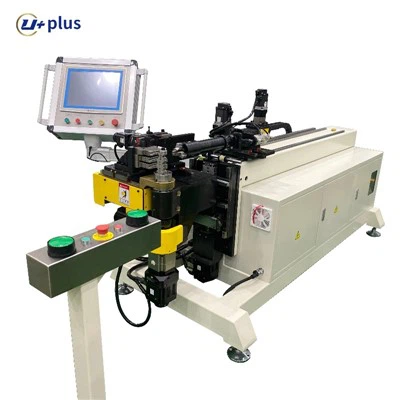
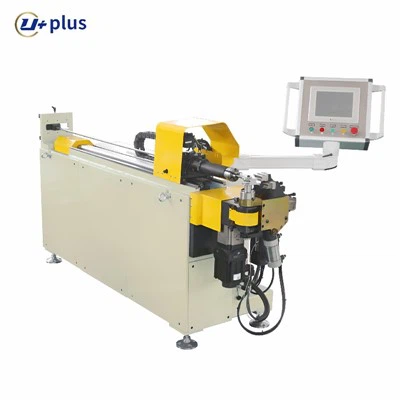
Tube end forming machines primarily use a specific processing procedure to form welded tubes, making them more structurally strong and aesthetically pleasing. The operating principle is that the tube passes through a positioning device and into a forming wheel assembly, where the rotating wheel force presses the tube end into the desired shape. Tube benders, on the other hand, utilize both cutting and bending methods to process tubes. Using a specific program, the bending mechanism bends the tube, achieving the desired bending specifications for steel or copper tubes.
2. Processing Method
Tube end forming machines and tube benders also differ significantly in their processing methods. Tube end forming machines primarily process welded tubes, processing them from the outside as raw material. Tube benders, on the other hand, bend tubes into the desired shape. These processes don't necessarily involve welded tubes; they can be used on raw tubes. Furthermore, tube benders can also perform cutting, while tube end forming machines are limited to forming tubes.
3. Application Areas
The application areas of pipe end forming machines and pipe bending machines are also significantly different. Pipe end forming machines are primarily used in construction projects, processing metal pipe connectors, guardrail pipe ends, and other applications. Pipe bending machines, on the other hand, have a wider range of applications and are used for pipe processing in rail transportation, airport terminals, petrochemicals, shipbuilding, and other fields. They are widely used in highway guardrails, industrial machinery, hydraulic piping in cranes, furniture, and gift products.
In short, although both pipe end forming machines and pipe bending machines are used for pipe processing, their operating principles, processing methods, and application areas are significantly different. Different processing requirements require the selection of the appropriate machine to complete the task.