Your Professional Tube Processing Equipment Supplier
U Plus is committed to developing advanced fully automated production equipment, We specialize in providing exceptional manufacturing process solutions, helping clients optimize workflows, enhance efficiency, reduce costs, and achieve business goals.As a global manufacturing powerhouse, China has accumulated extensive production experience and technological advantages through years of development and innovation.
-
![Angled-Insertion Evaporator Production Line]() Angled-Insertion Evaporator Production LineMaterial: Φ8 mm aluminum tube.view more
Angled-Insertion Evaporator Production LineMaterial: Φ8 mm aluminum tube.view more
Production Mode: Multiple single-station machines connected sequentially according to the production process.
Power Supply: 380V, 50Hz, three-phase five-wire system with protective... -
![Direct-Insertion Evaporator Production Line]() Direct-Insertion Evaporator Production LineProject Name: Direct-Insertion Evaporator Production Lineview more
Direct-Insertion Evaporator Production LineProject Name: Direct-Insertion Evaporator Production Lineview more
Application: Refrigerator / Refrigeration Evaporators
Material: Φ8 mm Aluminum Tube
Power Supply: 380V / 50Hz, Three-Phase Five-Wire System with Protective... -
![Pneumatic Type-12 Pipe Bending Machine]() Pneumatic Type-12 Pipe Bending MachineProcessed Productsview more
Pneumatic Type-12 Pipe Bending MachineProcessed Productsview more
Material: Soft copper tubes, aluminum tubes
Product tube diameter: Φ4.76mm–Φ12.7mm, wall thickness 0.4mm–1.0mm -
![Pneumatic Type-20 Pipe Bending Machine]() Pneumatic Type-20 Pipe Bending MachineProcessed Productsview more
Pneumatic Type-20 Pipe Bending MachineProcessed Productsview more
Material: Soft copper tubes, aluminum tubes
Product tube diameter: Φ4.0mm–Φ19.05mm, wall thickness 0.4mm–1.2mm (R≥1.5D; t represents wall thickness, R represents the bending radius at the midline... -
![Hydraulic Type-20 Double-Die Pipe Bending Machine]() Hydraulic Type-20 Double-Die Pipe Bending MachineProcessed Productsview more
Hydraulic Type-20 Double-Die Pipe Bending MachineProcessed Productsview more
Material: Soft copper tubes, aluminum tubes,low carbon steel tubes
Product tube diameter: Φ6.0mm–Φ19.05mm, wall thickness 0.4mm–1.5mm -
![Hydraulic Type-60 Pipe Bending Machine]() Hydraulic Type-60 Pipe Bending MachineProcessed Productsview more
Hydraulic Type-60 Pipe Bending MachineProcessed Productsview more
Material: soft temper copper tubes
Product tube diameter: Φ6.0mm–Φ55.0mm, wall thickness 0.4mm–2mm -
![Pneumatic Type-12 Pipe Bending Machine With 600 Auto Loader]() Pneumatic Type-12 Pipe Bending Machine With 600 Auto LoaderProcessed Productsview more
Pneumatic Type-12 Pipe Bending Machine With 600 Auto LoaderProcessed Productsview more
Material: Soft copper tubes, soft aluminum tubes
Product tube diameter: Φ4.76mm–Φ12.7mm, wall thickness 0.4mm–1.0mm (R≥1.5D; t represents wall thickness, R represents the bending radius at the midline... -
![Chipless Cutting Machine 2+2]() Chipless Cutting Machine 2+2Processed Productsview more
Chipless Cutting Machine 2+2Processed Productsview more
Material: Coiled copper tube TP1/TP2 (M/M2)
Tube Diameter: Φ5–Φ19.05 mm
Wall Thickness: 0.3–1.0 mm -
![Rotary Punching End Forming Machine]() Rotary Punching End Forming MachineProcessed Productsview more
Rotary Punching End Forming MachineProcessed Productsview more
Material: soft temper copper tubes
Product tube diameter: Φ5.0mm–Φ12.7mm, wall thickness 0.6mm–0.8mm -
![Automatic Tube End Processing Chamfering Machine]() Automatic Tube End Processing Chamfering MachineProcessed Productsview more
Automatic Tube End Processing Chamfering MachineProcessed Productsview more
Material: Aluminum Tubes
Maximum Processing Capacity: Ф20xt 1.5mm -
![Fully Automatic Tube End Processing Machine]() Fully Automatic Tube End Processing MachineProcessed Productsview more
Fully Automatic Tube End Processing MachineProcessed Productsview more
Material: stainless steel tubes
Product tube diameter: Φ6 mm–Φ20 mm, wall thickness 0.1mm -
![Fully Electric Tube End Forming Machine]() Fully Electric Tube End Forming MachineDurable and excellent rigidity with strong structureview more
Fully Electric Tube End Forming MachineDurable and excellent rigidity with strong structureview more
After cutting don’t need to wash, can go to next processing directly
Long cutting blade working life
Fully cover for movement part
Core control system is...


Why Choose Us
24-Hour Service
Our dedicated 24-hour online support ensures prompt responses, providing you with an excellent shopping experience. Feel free to reach out with any questions at any time.
Expertise & Focus
Our team brings deep industry knowledge and expertise to the table, offering tailored and reliable process solutions.
Innovation & Progress
We believe in the power of innovation to drive progress. By constantly exploring new technologies and solutions, we help our clients stay ahead of the competition, empowering them to navigate an ever-changing market landscape.
Integrity & Collaboration
Honesty and trust are the foundation of our partnerships. At U PLUSE, we are committed to upholding integrity in all our business dealings and cultivating long-lasting relationships that benefit both our clients and us.
Types of Tube Processing Equipment
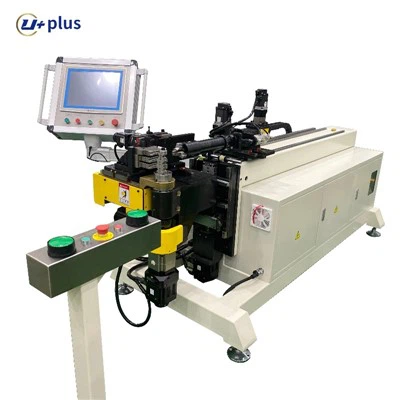
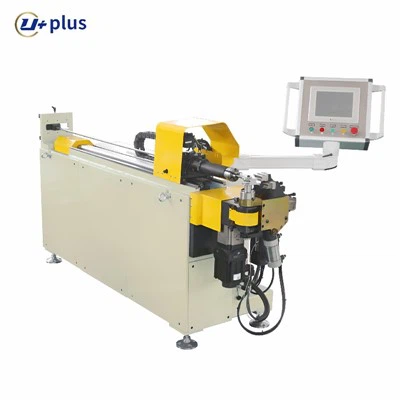
By far one of the most commonly used pieces of equipment for tube fabricators is a tube bending machine. These machines come in a variety of shapes and sizes, and each is fit for different capabilities, accessories, and features.
Another kind of tube fabrication equipment is the end-forming machine. End-forming equipment is used to change the tube’s geometry, usually near the end of the metal form. This is possible through a variety of processes using sand compaction to force the tube into the desired form. The different techniques of end-forming include beading, expansion, grooving, flaring, thickening, and more.
Notching machines are also used in the tube fabrication process. They are used to notch or punch holes and slots into the tube. This process is necessary for tubes that are to be joined together to form a similar joint.
Similar to notching machines, cutting machines are made to cut tubes. However, this process cuts through the tube entirely. Additionally, there is a wide variety of techniques and methods that can be performed, which are needed depending on the tube’s end-use. Some of these machines are saw setups that quickly perform simple cuts.
Deburring is one of the last processes carried out in tube fabrication. It is performed to remove the small imperfections on the edges of machined tubes. These machines are needed to provide a smooth and reliable tube.
Product Paramenters
|
Item |
Parameter |
|
Material / Metal Processed |
Soft copper tubes, aluminum tubes,low carbon steel tubes |
|
Model |
TB-HG-20-3A-R2 |
|
Machine Type |
Pipe and tube bending machine |
|
Bending diameter |
Φ6.0mm–Φ19.05mm |
|
Wall thickness |
0.4 mm ≤ δ ≤ 1.5 mm |
|
Bending radius |
R10 – R60 mm (R/D ≥ 1.5) |
|
Air supply |
0.5 ~ 0.8 Mpa |
|
Voltage |
220V/380V or customized |
|
Color |
Customizable or blue |
|
Warranty |
12Months |
|
Extra function |
Automatic loading& unloading devices |
|
Bending direction |
Left / right / Left& right |
|
Place of Origin |
Zhejiang China |
|
OEM/ODM |
Acceptable |
Technical Principles of Tube Processing Equipment

Selecting the right tool
Choose tools (e.g., benders) based on the bending method and pipe material. Tools must match the pipe’s diameter and wall thickness. Incorrect sizing can damage the pipe.

Controlling bending force
Precisely control the force applied to avoid cracks or deformations. The force must not exceed the material’s strength.

Appropriate bending speed
Adjust speed according to the pipe type and bending method. High speed may cause distortions; low speed prolongs production time.

Using advanced machinery
Modern metalworking machines, such as mandrel-free benders, ensure precision and repeatability. They streamline the process and deliver high-quality results.
Applications of Tube Processing Equipment
Automotive Manufacturing
Fabricating exhaust systems, brake lines, chassis components, and roll cages.
01
Aerospace
Producing hydraulic lines, fuel conduits, and structural supports for aircraft and spacecraft.
02
Construction
Manufacturing scaffolding, structural frames, railings, and piping systems for commercial and residential buildings.
03
Oil & Gas and Petrochemical
Creating high-pressure pipes and conduits for fluid and gas transport, refineries, and offshore platforms.
04
Plumbing and HVAC
Forming copper, steel, and plastic tubing for water, gas, and air systems.
05
Regular Inspection is Key
The first step in any maintenance program is regular inspection. Inspections help identify potential issues before they become major problems.
Cleanliness Matters
Welded pipe equipment operates at high speeds and under intense conditions, which can lead to the accumulation of dirt, debris, and other contaminants.
Check Electrical and Hydraulic Systems
Welded pipe equipment often includes electrical and hydraulic systems that require regular maintenance.
Maintain Cooling Systems
The cooling system is another vital part of welded pipe equipment, as it prevents overheating during the welding process.
Calibration and Testing
Regular calibration of the equipment ensures that it operates within the specified parameters. This is essential for producing high-quality pipes and minimizing wastage.
Replace Worn Parts Promptly
Even with regular maintenance, certain components will eventually wear out and need replacement. Keep track of parts like welding electrodes, bearings, rollers, and any other consumables.
Train Your Operators
Proper training for equipment operators is essential for optimal performance. Operators should be well-versed in the operation of the welding machine and the various maintenance procedures.
FAQ
We are one of the most professional tube processing equipment manufacturers and suppliers in China, specialized in providing high quality customized service. We warmly welcome you to wholesale durable tube processing equipment for sale here from our factory. For quotation, contact us now.