Copper tube bending is one of the key processes in air conditioning, refrigeration, and HVAC pipeline manufacturing. Bending precision directly affects pipe assembly, brazing quality, sealing performance, and overall system stability. If the bending angle, radius, or dimensional accuracy is poor, it may lead to assembly difficulties, pipe interference, unstable brazing joints, or a higher defect rate.
To improve copper tube bending precision, manufacturers need to optimize several factors, including material selection, equipment accuracy, tooling design, process parameters, inspection methods, and automation control.
1. Select the Right Copper Tube Material
The material properties of copper tubes directly affect bending quality. Different copper grades and hardness states perform differently during bending.
Common influencing factors include:
- Copper grade
- Tube diameter and wall thickness
- Material hardness
- Ductility
- Surface quality
- Tube roundness and straightness
For bending applications, the copper tube should have good ductility and stable dimensional consistency. If the material is too hard, cracking may occur during bending. If the wall thickness is uneven, oval deformation or local wrinkling may appear.
In air conditioning and refrigeration pipeline processing, the appropriate copper tube condition should be selected according to product structure and bending radius. Annealing can also be used when necessary to improve material ductility.
2. Design a Proper Bending Radius
The bending radius is an important factor affecting bending precision. If the radius is too small, the outer wall of the copper tube may become thinner, while the inner wall may wrinkle or even crack.
The bending radius should be determined based on:
- Copper tube outer diameter
- Wall thickness
- Material ductility
- Bending angle
- Product assembly space
- Subsequent brazing or connection requirements
During product design, an excessively small bending radius should be avoided. If the structure allows, increasing the bending radius can effectively reduce deformation risks and improve bending stability and consistency.
3. Use High-Precision CNC Tube Bending Equipment
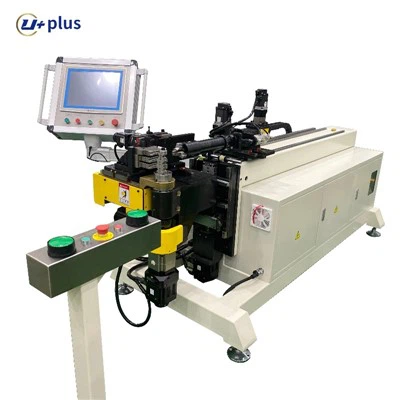
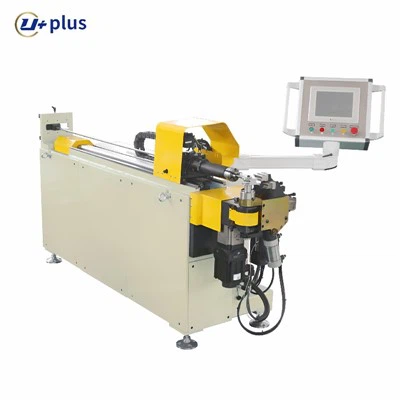
Traditional manual or semi-automatic bending methods are highly dependent on operator experience, making it difficult to maintain consistency in mass production. High-precision CNC tube bending machines can significantly improve bending accuracy and production stability.
Advantages of CNC tube bending equipment include:
- Accurate control of bending angle
- Accurate control of feeding length
- Accurate control of rotation angle
- Reduced manual errors
- Consistent quality in batch production
- Suitable for complex multi-bend tube parts
For air conditioning pipelines, refrigeration pipelines, and heat exchanger copper tube production, CNC tube bending equipment can improve processing efficiency and reduce the defect rate.
4. Optimize Bending Tooling Design
Tooling is one of the core factors affecting bending quality. Bending dies, clamping dies, pressure dies, wiper dies, and mandrels all influence copper tube forming accuracy.
Tooling design should consider:
- The die groove should match the copper tube outer diameter
- The die surface should be smooth to avoid scratches
- Clamping force should be appropriate to prevent slipping or surface damage
- The wiper die structure should reduce inner-wall wrinkling
- The mandrel position should be accurate to control ovality and collapse
If the tooling clearance is too large, the copper tube may deform. If the clamping force is too high, surface dents may occur. Therefore, tooling should be properly matched according to tube specifications and bending requirements.
5. Control Bending Process Parameters
Bending precision depends not only on equipment and tooling but also on process parameter control.
Key parameters include:
- Bending angle
- Bending speed
- Feeding length
- Rotation angle
- Clamping pressure
- Mandrel extension position
- Springback compensation
- Lubrication condition
Among these, springback compensation is especially important. Copper tubes experience a certain degree of elastic springback after bending. Without compensation, the actual bending angle may be smaller than the set angle. By conducting process trials and establishing proper springback compensation values, bending angle accuracy can be greatly improved.
6. Reduce Common Bending Defects
Common defects in copper tube bending include:
- Outer wall cracking
- Inner wall wrinkling
- Wall thinning
- Oval deformation
- Surface dents
- Bending angle deviation
- Inaccurate dimensional positioning
To reduce these issues, manufacturers need to control material condition, bending radius, tooling accuracy, and equipment parameters. For thin-wall tubes or small-radius bending, a mandrel can be used to support the inner wall and reduce collapse or oval deformation. For materials prone to wrinkling, the wiper die position and clamping pressure should be adjusted.
7. Strengthen Inspection and Quality Control
High-precision tube bending requires a reliable inspection system. Key dimensions should be checked during production, including:
- Bending angle
- Bending radius
- Total tube length
- End position
- Tube ovality
- Surface dents
- Wall thinning rate
For mass production, dedicated gauges, 3D measuring equipment, or online inspection systems can be used to improve inspection efficiency and accuracy. Inspection data can also be used to adjust equipment parameters in time and reduce batch defects.
8. Adopt Automated Production Solutions
In high-volume copper tube processing, automated production lines can effectively improve bending precision and product consistency. Automated copper tube bending equipment can usually be integrated with feeding, cutting, expanding, reducing, deburring, and inspection processes.
Advantages of automation include:
- Improved production efficiency
- Reduced manual operation errors
- Consistent product quality
- Lower labor costs
- Suitable for multi-specification mass production
- Easier process parameter management and traceability
For the air conditioning, refrigeration, and HVAC industries, automated bending equipment not only improves bending accuracy but also enhances the stability of the entire production line.
9. Conclusion
Improving copper tube bending precision requires comprehensive optimization of material selection, bending radius design, CNC equipment, tooling matching, parameter control, defect prevention, and quality inspection.
For mass production manufacturers, high-precision CNC tube bending equipment and automated production lines are important solutions for improving bending accuracy, reducing defect rates, and increasing production efficiency. As manufacturing moves toward automation and intelligent production, copper tube bending will continue to develop toward higher precision, higher efficiency, and greater stability.