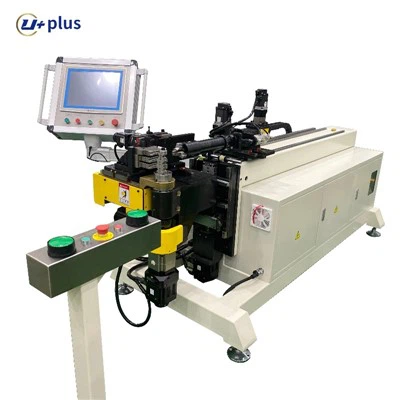
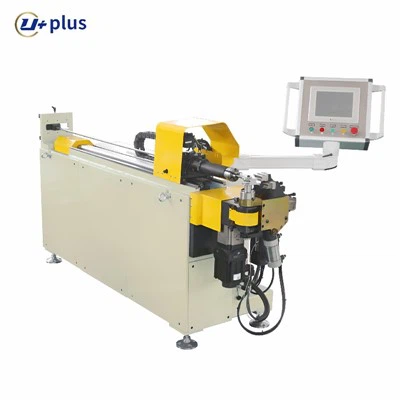
Copper tubes are widely used in air conditioning, refrigeration, HVAC systems, heat exchangers, and industrial equipment. Since copper is a relatively high-cost material, unreasonable cutting plans, excessive cutting loss, poor bending quality, cracking during expanding, or frequent welding rework can all lead to significant material waste.
Reducing material waste in copper tube processing requires systematic improvement in process design, cutting technology, nesting optimization, equipment accuracy, process control, and scrap recycling.
1. Optimize Fixed-Length Cutting and Nesting Plans
Cutting is the first step in copper tube processing and a key factor in controlling material utilization. Traditional manual nesting often results in excessive tube ends, short remnants, and material waste.
By using professional nesting software, manufacturers can intelligently arrange cutting plans according to order requirements and different tube lengths, maximizing the use of each copper tube. For mass production, proper nesting can significantly reduce scrap and improve material utilization.
Common optimization methods include:
- Accurately calculating the developed length according to product drawings
- Using nesting software to optimize the cutting sequence
- Reducing short remnants and tail material
- Establishing a standard cutting database
- Reusing available short tube sections for secondary processing
Modern automatic cutting equipment combined with intelligent nesting systems can further improve material utilization and reduce manual calculation errors.
2. Introduce Advanced Cutting Technology
Traditional sawing usually produces a wider kerf, resulting in cutting loss. In high-volume copper tube processing, this accumulated loss can become a significant source of material waste.
Using high-precision automatic cutting equipment or fiber laser tube cutting equipment can effectively reduce cutting loss. Laser cutting offers high speed, high precision, and a narrow kerf, helping reduce material loss at the cut.
Advantages of advanced cutting technology include:
- High cutting accuracy
- Narrower kerf and lower material loss
- Better end-face quality
- Reduced burrs and secondary processing
- Suitable for automated continuous production
Some modern laser tube cutting machines can also work with intelligent clamping and nesting software to minimize tail material, fully utilize the end sections of long tubes, and reduce the tail waste commonly found in traditional equipment.
3. Improve Cutting and Feeding Accuracy
Unstable cutting length, uneven end faces, excessive burrs, or feeding errors can affect subsequent bending, expanding, reducing, and welding quality, eventually causing rework or scrap.
To reduce this type of waste, manufacturers should focus on controlling:
- Feeding length accuracy
- Cutting end-face flatness
- Tube end deformation
- Burr residue
- Tool wear
- Clamping stability
For air conditioning and refrigeration pipeline production, automatic feeding and fixed-length cutting equipment can ensure consistent tube length in batch production, reduce human error, and lower material waste from the source.
4. Adopt Near-Net-Shape or Non-Cutting Processes
In copper tube component processing, excessive reliance on turning, milling, and other subtractive machining methods can generate large amounts of copper chips and reduce material utilization.
For some complex-shaped copper tube parts, forming processes such as drawing, extrusion, bending, expanding, and reducing should be prioritized to reduce material removal. For example, some special-shaped copper tube parts can be formed through multi-pass precision drawing or extrusion with almost no metal chips, thereby improving material utilization.
Advantages of near-net-shape or non-cutting processes include:
- Reduced copper chip generation
- Higher material utilization
- Lower scrap recycling costs
- Improved product consistency
- Better mechanical performance of parts
At the product design stage, structures suitable for forming should be considered as much as possible to reduce unnecessary cutting processes.
5. Design the Bending Process Properly
During bending, copper tubes may suffer from cracking, wrinkling, oval deformation, and wall thinning. Once bending fails, the entire copper tube may be scrapped.
Key methods to reduce bending waste include:
- Designing a proper bending radius
- Avoiding excessively small bending radii
- Selecting suitable tooling according to tube diameter and wall thickness
- Controlling bending speed and clamping pressure
- Setting proper springback compensation parameters
- Using mandrel support for thin-wall tubes
If the product structure allows, increasing the bending radius can reduce deformation risk and improve yield rate and batch consistency.
6. Control Expanding, Reducing, and Flanging Quality
Expanding, reducing, and flanging are common processes for copper tube connections. If the tooling is mismatched, the tube end has burrs, or parameters are not properly set, defects such as cracking, eccentricity, deformation, and unstable dimensions may occur.
Ways to improve forming yield include:
- Matching dedicated tooling according to tube specifications
- Controlling expanding amount, reducing amount, and flanging height
- Ensuring the tube end face is flat
- Removing burrs and impurities before processing
- Performing annealing when necessary
- Regularly checking tooling wear
Stable forming quality can reduce assembly defects and subsequent welding rework, thereby lowering overall material loss.
7. Optimize Processing Parameters
Improper processing parameters may accelerate tool wear, increase dimensional deviation, reduce surface quality, and ultimately lead to more defective products.
During cutting or forming, parameters should be set properly according to copper tube material, wall thickness, and product requirements, including:
- Cutting speed
- Feed rate
- Cutting depth
- Clamping pressure
- Forming speed
- Lubrication method
- Machining allowance
Especially in cutting processes, manufacturers should avoid overly conservative "leave more material" practices. Accurately controlling machining allowance can reduce unnecessary material removal while ensuring product dimensions and surface quality.
8. Reduce Welding Rework
In air conditioning and refrigeration pipelines, copper tubes usually require brazing or automated welding. If the dimensions from previous processes are unstable, or if welding parameters are not properly controlled, defects such as weak joints, missing welds, overheating, oxidation, and leakage may occur.
Methods to reduce welding waste include:
- Ensuring stable fitting clearance between tube components
- Improving dimensional consistency in expanding and reducing
- Controlling welding temperature and heating time
- Selecting proper filler metal and flux
- Using automated welding or brazing equipment
- Adding post-welding leak testing and visual inspection
Stable welding quality reduces repair, scrap, and repeated material consumption.
9. Strengthen In-Process Quality Control
Material waste does not usually occur only at the final stage. It gradually accumulates across each processing step. Therefore, a stable quality control system should be established during copper tube production.
Key inspection items include:
- Cutting length
- Tube end burrs
- Bending angle
- Bending radius
- Ovality
- Expanding size
- Reducing size
- Welding appearance
- Leakage condition
Through first-piece inspection, patrol inspection, and online inspection, abnormalities can be identified in time to prevent batch defects.
10. Build a Scrap Classification and Closed-Loop Recycling System
Even with optimized processes, a certain amount of scrap will still be generated during copper tube processing. Efficient scrap management can turn waste into recyclable resources and reduce overall costs.
Different labeled scrap collection containers can be placed on the production site to classify copper chips, tube ends, defective products, and other waste by material and form, such as:
- Red copper scrap
- Brass scrap
- Bronze or copper alloy scrap
- Copper chips
- Waste tube ends
- Defective tube parts
The more precisely scrap is classified, the higher its recycling value and the lower the subsequent processing cost.
For mixtures of copper chips and coolant, centrifugal separation, filtration, or briquetting equipment can be used. After briquetting, copper chips take up less space and are easier to transport and remelt. Filtered and purified coolant can also be reused, reducing resource waste and treatment costs.
11. Use Automated Copper Tube Processing Equipment
Compared with manual processing, automated equipment can control feeding, cutting, bending, expanding, reducing, and welding parameters more consistently, thereby reducing human error.
Advantages of automated copper tube processing equipment include:
- Improved material utilization
- Reduced dimensional deviation
- Fewer manual operation errors
- Better batch consistency
- Less rework and scrap
- Higher production efficiency
- Easier process data tracking
For high-volume production in the air conditioning, refrigeration, and HVAC industries, automated production lines are an important solution for reducing material waste.
Conclusion
Reducing material waste in copper tube processing requires systematic improvement in cutting and nesting, advanced cutting technology, bending and forming, expanding and reducing, parameter optimization, welding control, process inspection, and scrap recycling.
For air conditioning, refrigeration, and HVAC manufacturers, high-precision automated copper tube processing equipment can not only reduce material waste, but also improve product consistency, lower labor costs, and increase overall production efficiency.
As manufacturing continues to move toward precision, intelligence, and automation, copper tube processing companies should improve efficiency, reduce costs, and achieve more stable production through process optimization and equipment upgrades.