1. Raw Material Preparation and Pre-Treatment
Before processing copper tubes, the right copper material should be selected according to the application.
Common copper materials include:
Red Copper: Such as T2 and TP2, with excellent thermal conductivity, commonly used in air conditioning and refrigeration pipelines.
Brass: Such as H62 and H65, with higher strength, suitable for some connectors and structural parts.
Copper Alloys: Such as B10 cupronickel and copper-nickel-silicon alloy, suitable for applications requiring corrosion resistance or higher strength.
Copper tube billets are usually prepared through continuous casting and rolling or ingot hot rolling. Continuous casting and rolling offers high efficiency and is suitable for continuous production, while ingot hot rolling is suitable for some large-size tubes or products with special performance requirements.
2. Common Copper Tube Forming Processes
1. Drawing
Drawing is a common process in precision copper tube manufacturing. After pickling and lubrication, the tube billet is drawn through a die to reduce the diameter, adjust wall thickness, and improve dimensional accuracy.
Drawing is suitable for producing high-precision, small-diameter, and thin-wall copper tubes. During multi-pass drawing, intermediate annealing is usually required to eliminate work hardening and improve material ductility.
2. Rolling
Rolling uses rollers to plastically deform the copper tube in order to achieve the required diameter and wall thickness.
Common rolling methods include:
Cold Rolling: Suitable for high-precision thin-wall copper tubes.
Planetary Rolling: Suitable for large-diameter copper tubes with high wall thickness accuracy.
Rolling is commonly used in the production of heat exchanger tubes, refrigeration copper tubes, and other precision tubes.
3. Extrusion
Extrusion is mainly used for producing large-diameter and thick-wall copper tubes. The copper billet is heated and forced through a die to form the tube.
This process requires strict control of extrusion ratio, heating temperature, die temperature, and extrusion speed. It is suitable for copper tube products that require higher strength.
4. Tube Bending
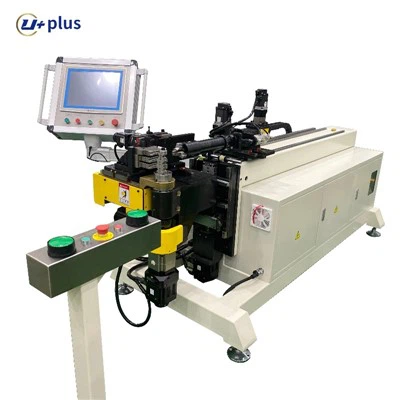
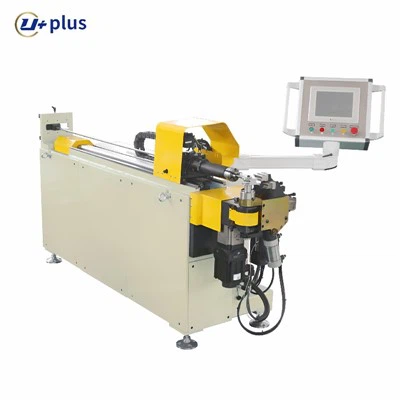
Tube bending is one of the most common forming processes in air conditioning and refrigeration pipelines. It is mainly used to change the direction of copper tubes and reduce the number of joints.
Modern production usually uses CNC tube bending machines to accurately control bending angle, bending radius, and feeding length. During bending, key factors such as wall thinning, ovality, wrinkling, and cracking must be carefully controlled.
5. Tube Expanding
Tube expanding is the process of enlarging the end diameter of a copper tube, allowing it to connect with another tube or fitting.
It is widely used in air conditioning pipelines, refrigeration systems, and heat exchanger assembly. Tube expanding improves connection stability and provides a suitable overlap structure for subsequent brazing.
6. Tube Reducing
Tube reducing is the process of reducing the diameter of the tube end or a specific section, usually for connecting tubes with different diameters.
This process can reduce the use of additional fittings, improve structural compactness, and lower assembly costs. During processing, defects such as wrinkling, eccentricity, and surface scratches should be avoided.
7. Flanging and Flaring
Flanging and flaring are mainly used for copper tube end connections. These processes improve sealing performance and connection strength.
They are commonly used in air conditioning connection tubes, refrigeration pipeline interfaces, and mechanical sealing structures. The tube end must be flat, the angle must be consistent, and no cracks should appear.
8. Inner-Grooved Tube Processing
Inner-grooved copper tubes are commonly used in high-efficiency heat exchangers. By forming grooves on the inner wall of the copper tube, the heat exchange area is increased and heat transfer efficiency is improved.
Common processing methods include drawing and welding. Drawing methods can be further divided into extrusion drawing and spin drawing.
3. Finishing Processes
1. Cutting
Before further processing, copper tubes are usually cut to the required length. Common cutting methods include tube cutter cutting, sawing, rotary cutting, and laser cutting. After cutting, the tube end should be flat and the length should be consistent.
2. Deburring and Cleaning
After cutting, burrs may appear at the tube end. These should be removed using deburring equipment or a grinding wheel. Compressed air can be used to clean the inside and outside of the tube to prevent copper chips, oil stains, and impurities from affecting subsequent brazing or refrigeration system operation.
3. Annealing
After drawing, bending, expanding, and other forming processes, copper tubes may experience work hardening. Annealing improves material ductility and surface quality, making the tube more suitable for subsequent forming and welding.
4. Trends in Automated Copper Tube Processing
As the air conditioning, refrigeration, and HVAC industries demand higher efficiency and more consistent quality, copper tube processing is moving toward automation, precision, and intelligence.
Modern copper tube processing equipment can integrate:
- Automatic feeding
- Automatic cutting
- Automatic bending
- Automatic expanding
- Automatic reducing
- Automatic deburring
- Automatic inspection
- Automatic brazing
Automated processing improves production efficiency, reduces labor costs, minimizes human error, and ensures consistent quality in mass production.
5. Conclusion
Copper tube forming is a key process in air conditioning, refrigeration, and HVAC manufacturing. Common processes include drawing, rolling, extrusion, bending, expanding, reducing, flanging, inner-grooved tube processing, cutting, deburring, and annealing.
Choosing the right copper tube processing technology and automated equipment can effectively improve production efficiency, processing accuracy, and product quality. As manufacturing continues to upgrade, copper tube processing equipment will keep developing toward higher efficiency, higher precision, and smarter automation.