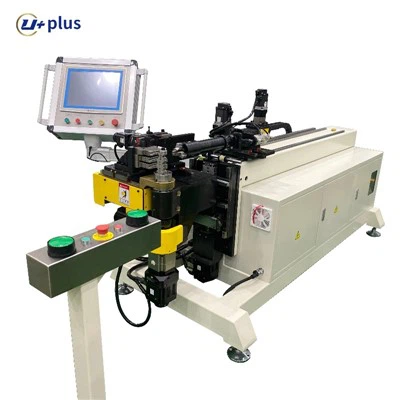
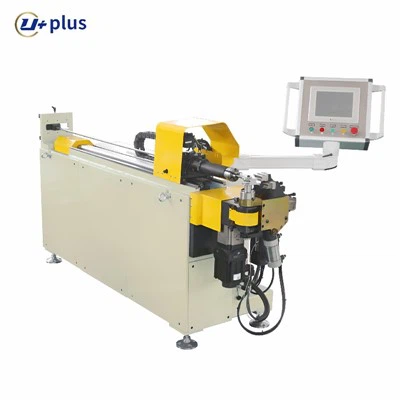
The working principle of a CNC tube bender is as follows: After the machine is powered on, the feed motor begins rotating, driving the double-row wheels to move the material. The servo motor's thrust bends the material to the desired curvature. When the material reaches the desired position, the servo motor rotates forward to bend the material and reverses to reset the worktable, completing the bend.
Additionally, the dimension calculation method for a CNC tube bender is crucial. This requires an accurate understanding and calculation of the material properties, the desired bend curvature, and the machine parameters. Proper dimension calculation ensures high-quality and efficient bending, meeting various complex bending requirements.
After the material is fed, the feed motor starts, driving the double-row wheels to begin feeding the material. Subsequently, the material is automatically bent to the desired curvature under the thrust of the servo motor. After bending, the semi-finished product should be neatly stacked, ensuring that the hook faces downward. When reversing the turntable, always wait until it has completely stopped. After the operation is completed, the site must be cleaned, the machine maintained, and the power supply and lockbox must be turned off for safety. When using a CNC bending machine for bending, the specified limits on pipe diameter, number of pipes, and mechanical speed must be strictly adhered to. Furthermore, standing within the bending radius or on the unsecured side of the machine is strictly prohibited to ensure safe operation. When bending high-hardness or low-alloy materials, the mold diameter must be changed according to the machine's mold specifications, and the mandrel must be adjusted accordingly.
CNC bending machines require multiple logical checks in their programming, executing each action in a strict, predetermined sequence, including material comparison and determining whether a specific angle has been achieved. Furthermore, bending machines are closely linked to the development of new energy and the agricultural economy, and are expected to become a crucial component of future agricultural production systems. Furthermore, bending machines can be integrated with the processing of agricultural greenhouse pipes, oval pipes, and other products, as well as the tourism industry. By creating unique tourism programs such as rural landscape tours and agricultural experience activities, they can attract tourists from surrounding cities on weekends and holidays, effectively utilizing resources and increasing tourism revenue.