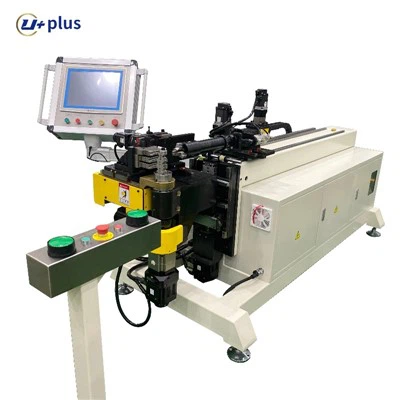
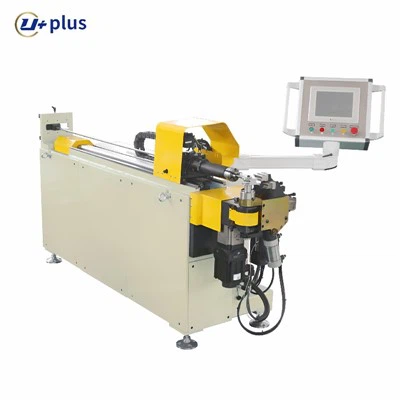
The continuous emergence of new bending processes and advanced CNC tube bending machines has provided strong support for tube bending production. Since my country's CNC machining technology lags significantly behind that of industrialized nations, many companies have introduced advanced foreign CNC tube bending equipment. However, these machines require stringent bending parameters and CNC programming requirements. Furthermore, the complex interaction between these parameters and die parameters sometimes necessitates expensive imports of die and mandrels to maintain production, hindering the effective utilization of these advanced tube bending machines. Machine tool manufacturers maintain confidentiality of their technology, forcing companies to conduct preliminary trials and repeated trial-and-error bending on various tubes when using high-end CNC tube bending machines. This extends production cycles and increases costs, resulting in significant waste. This phenomenon stems primarily from a lack of understanding and mastery of the bending deformation mechanisms of pipes of varying materials. This results in an inability to effectively predict, eliminate, and control the various deformation defects that occur during the bending process. Furthermore, many CNC pipe bending machines exhibit significant deviations in their built-in functions, which are partly due to differences in pipe material, manufacturing quality, and machine tool manufacturers. Furthermore, a lack of understanding of vector bending technology leads to an inability to accurately operate CNC pipe bending equipment based on the mechanical properties of the pipe and the required bending quality. These issues hinder the development and widespread adoption of digital pipe bending and precision bending technologies, and represent critical theoretical and technical challenges that urgently need to be addressed in the fields of plastic processing and digital manufacturing.
 English
- English
- Français
- Deutsch
- 日本語
- Italiano
- Español
- Português
- русский
- Latviešu
- Gaeilgenah Éireann
- Việt Nam
- 한국어
- slovenščina
- Indonesia
- Malti
- فارسی
- Bai Miaowen
- עברית
- Čeština
- dansk
- বাংলা
- Norsk
- hrvatski
- Eesti
- Polski
- українська
- România limbi
- हिंदी
- Türkçe
- Ελληνικά
- Български
- عربي
- ไทย
- Svenska
- bosanski
- suomi
- Melayu
- Cymraeg
- Kreyòl Ayisyen
- Català
- íslenska
- Nederlands
- O'zbek
- magyar
- Srbija jezik (latinica)
- Lietuvių
- slovenčina
- اردو