Copper tubes are key components in air conditioning systems. They are widely used in evaporators, condensers, connecting pipelines, distributors, liquid receivers, and pipelines around compressors. Because copper tubes offer excellent thermal conductivity, corrosion resistance, ductility, and brazing performance, they are highly suitable for air conditioning and refrigeration systems.
In air conditioner manufacturing, copper tube processing quality directly affects system sealing performance, heat exchange efficiency, assembly accuracy, and overall operating stability. This article introduces the complete copper tube processing flow in the air conditioning industry, including material selection, main processing methods, quality control, and automation trends.
1. Why Are Copper Tubes Widely Used in Air Conditioning Systems?
Copper tubes are mainly used for refrigerant circulation and heat transfer in air conditioning systems. Compared with other materials, copper tubes offer several advantages:
- Excellent thermal conductivity, which helps improve heat exchange efficiency
- Strong corrosion resistance, suitable for long-term operating environments
- Good ductility, suitable for bending, expanding, reducing, and other forming processes
- Good brazing performance, suitable for brazing and automated welding
- Reliable sealing performance, suitable for refrigerant pipeline systems
Therefore, copper tubes are widely used in residential air conditioners, commercial air conditioners, central air conditioning systems, and refrigeration equipment.
2. Common Copper Tube Materials for Air Conditioning
Air conditioning copper tubes usually use red copper materials with good thermal conductivity and stable processing performance.
Common materials include:
- T2 red copper: Good electrical and thermal conductivity, widely used in various applications.
- TP2 phosphorus deoxidized copper: Good brazing performance and corrosion resistance, commonly used in refrigeration and air conditioning pipelines.
- Inner-grooved copper tubes: Mainly used in heat exchangers to increase heat exchange area and improve heat transfer efficiency.
In actual production, the proper copper tube material should be selected according to pipeline structure, wall thickness requirements, bending radius, brazing method, and operating environment.
3. Main Process Flow of Air Conditioning Copper Tube Processing
Copper tube processing in the air conditioning industry usually includes the following steps:
- Copper tube cutting
- Tube end deburring
- Copper tube bending
- Expanding, reducing, or flanging
- Tube cleaning
- Copper tube welding or brazing
- Leak testing and quality inspection
- Packaging and assembly
Different air conditioning products have different structures, so the specific process flow may vary. For complex pipeline assemblies, multiple processes are usually combined.
4. Copper Tube Cutting
Cutting is the first step in copper tube processing. Cutting accuracy directly affects subsequent bending, expanding, brazing, and assembly.
- Common cutting methods include:
- Tube cutter cutting
- Saw cutting
- Rotary cutting
- Automatic fixed-length cutting
- Laser tube cutting
For high-volume air conditioning copper tube production, automatic feeding and fixed-length cutting equipment is recommended to improve cutting efficiency and length consistency.
Key quality control points for cutting include:
- Accurate length
- Flat tube end face
- Minimal tube end deformation
- Fewer burrs
- Less copper chip residue inside the tube
Good cutting quality can reduce rework in later processes and improve overall production line efficiency.
5. Tube End Deburring and Cleaning
After cutting, burrs and copper chips are often generated at the tube end. If not removed properly, they may affect expanding, reducing, brazing, and system cleanliness.
Common treatment methods include:
- Internal and external deburring
- Chamfering
- Mechanical brush cleaning
- Compressed air blowing
- Nitrogen purging
- Ultrasonic cleaning
For air conditioning and refrigeration systems, internal tube cleanliness is especially important. Copper chips, oil, or impurities entering the system may cause capillary blockage, compressor damage, or reduced cooling performance.
6. Copper Tube Bending
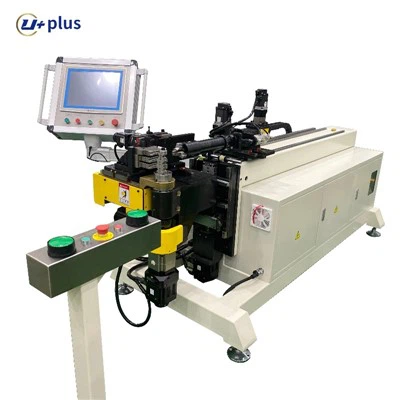
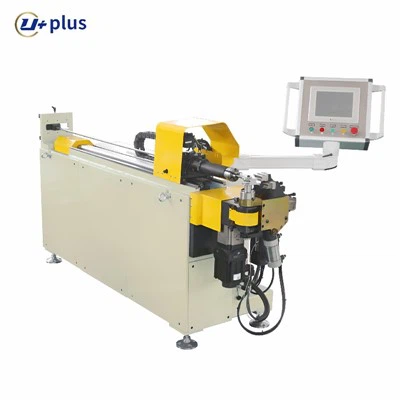
Tube bending is one of the most common processes in air conditioning pipeline manufacturing. It is used to change the direction of pipelines and meet the internal space layout requirements of the air conditioner.
Modern air conditioning copper tube processing usually uses CNC tube bending machines, which can precisely control:
- Bending angle
- Bending radius
- Feeding length
- Tube rotation angle
- Springback compensation parameters
Common bending quality problems include:
- Outer wall cracking
- Inner wall wrinkling
- Wall thinning
- Oval deformation
- Bending angle deviation
- Surface dents
The key to improving bending quality is selecting the proper bending radius, tooling, mandrel, and process parameters. For thin-wall copper tubes or small-radius bending, mandrel support is usually required to reduce collapse and oval deformation.
7. Expanding, Reducing, and Flanging
During connection and assembly, air conditioning copper tubes often require tube end forming.
1. Expanding
Expanding increases the diameter of the tube end, making it easier to connect with another copper tube or fitting. An expanded structure usually helps improve brazing stability.
2. Reducing
Reducing decreases the tube end or local diameter, allowing connection between tubes with different diameters and reducing the need for extra fittings.
3. Flanging and Flaring
Flanging and flaring are commonly used for mechanical or sealing connections. They improve tube end connection strength and sealing performance.
These processes require strict control of tube end size, roundness, end-face flatness, and surface cracks to avoid brazing defects or leakage risks caused by poor forming quality.
8. Copper Tube Welding and Brazing
Welding is a key process in copper tube assembly manufacturing. Copper-to-copper and copper-to-fitting connections are usually completed by brazing.
Common welding and brazing methods include:
- Flame brazing
- Induction brazing
- Automated brazing
- Robotic welding
Welding quality directly affects the sealing performance and reliability of air conditioning systems. Common welding defects include weak joints, missing brazing, overheating, oxidation, porosity, and leakage.
Ways to improve welding quality include:
- Ensuring stable fitting clearance
- Removing oil and oxide layers before welding
- Selecting proper filler metal and flux
- Controlling heating temperature and time
- Using automated welding equipment
- Performing leak testing after welding
For mass production, automated brazing and induction brazing can improve welding consistency and reduce manual operation errors.
9. Leak Testing and Quality Inspection
After copper tube processing is completed, strict inspection is required to ensure that the pipeline is leak-free, dimensionally accurate, and visually qualified.
Common inspection items include:
- Tube part dimensional inspection
- Bending angle inspection
- Tube end forming size inspection
- Surface appearance inspection
- Weld joint appearance inspection
- Air tightness testing
- Pressure testing
- Helium leak testing or water leak testing
In refrigeration systems, leakage is a serious problem. Therefore, air tightness testing and welding quality inspection are essential steps in copper tube processing.
10. Common Problems in Air Conditioning Copper Tube Processing
- Common problems in actual production include:
- Inconsistent cutting length
- Excessive tube end burrs
- Bending angle deviation
- Wall thinning or wrinkling
- Cracking during expanding
- Eccentric reducing
- Brazing leakage
- Internal impurity residue
- Surface scratches or dents
These problems are usually related to material condition, equipment accuracy, tooling matching, process parameters, and operational stability. Automated equipment, standardized processes, and in-process inspection can effectively reduce defect rates.
11. Automation Trends in Air Conditioning Copper Tube Processing
As the air conditioning industry requires higher production efficiency, more stable quality, and better cost control, copper tube processing is moving toward automation, flexibility, and intelligent manufacturing.
Modern automated copper tube production lines can integrate:
- Automatic feeding
- Automatic fixed-length cutting
- Automatic deburring
- Automatic bending
- Automatic expanding
- Automatic reducing
- Automatic flanging
- Automatic welding
- Automatic leak testing
- Automatic unloading and sorting
Advantages of automated copper tube processing include:
- Higher production efficiency
- Lower labor costs
- Fewer manual errors
- Better product consistency
- Reduced material waste
- Suitability for mass production
- Easier process data tracking
For residential air conditioner, commercial air conditioner, and refrigeration equipment manufacturers, automated copper tube processing equipment can significantly improve production line competitiveness.
Conclusion
Copper tube processing is an important part of air conditioner manufacturing. It involves multiple processes, including cutting, deburring, bending, expanding, reducing, flanging, cleaning, welding, and leak testing. Each process affects the sealing performance, heat exchange efficiency, and operating reliability of the air conditioning system.
Choosing the right copper tube material, stable processing technology, and high-precision automated equipment can effectively improve processing quality, reduce material waste, lower labor costs, and improve product consistency and reliability.
As the air conditioning industry continues to develop toward high efficiency, energy saving, intelligent manufacturing, and automated production, copper tube processing equipment will also continue to upgrade, providing manufacturers with more efficient and stable production solutions.