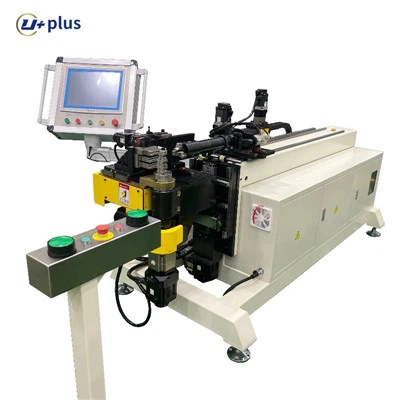
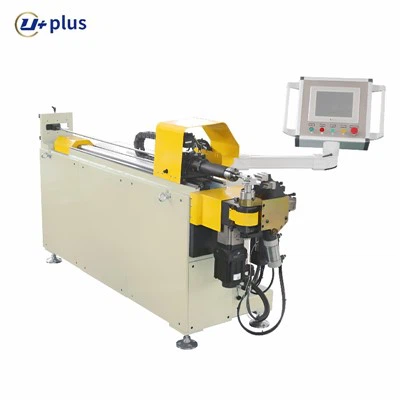
After purchasing HVAC tube processing equipment, proper acceptance testing is essential to ensure that the machine meets actual production requirements. Processing accuracy, cycle time, and operating stability should all be verified before the equipment is approved for production.
For copper tube cutting, bending, expanding, reducing, and automated processing machines, the following inspection points are particularly important.
1. Check the Machine Configuration
First, confirm that the machine matches the purchase agreement and technical specifications.
Key items include:
Machine model and main configuration
Control and drive systems
Processing dies and fixtures
Automatic feeding and unloading systems
Safety protection devices
Also check that tools, spare parts, operation manuals, and electrical documents are complete.
2. Verify Processing Accuracy
Processing accuracy is one of the most important acceptance criteria.
Use the actual production materials and product drawings to test the machine. Check:
Cutting length accuracy
Bending angles and radii
Expanding and reducing dimensions
Cracks or deformation at tube ends
Dimensional consistency across multiple parts
Do not inspect only one sample. Continuous sample production is necessary to verify repeatability.
3. Check Production Cycle Time
Machine speed directly affects production capacity.
Measure the complete processing cycle, including feeding, positioning, clamping, processing, and unloading.
Important factors include:
Actual cycle time per part
Continuous production capacity
Automatic loading and unloading speed
Changeover and adjustment time
Cycle time should be verified using agreed workpieces, materials, and operating conditions, rather than relying on unloaded machine speed.
4. Test Continuous Operating Stability
A machine producing one qualified part does not necessarily mean it is suitable for mass production.
Conduct a continuous running test for the period agreed upon with the supplier. Monitor:
Unexpected alarms or shutdowns
Feeding and positioning stability
Dimensional consistency
Electrical and hydraulic system performance
Abnormal vibration or noise
This test helps identify potential problems before the machine enters regular production.
5. Inspect Dies and Fixtures
Tooling and fixtures directly affect tube forming quality.
Check whether clamping is reliable, positioning is accurate, and the tooling matches the required product specifications.
For machines handling multiple tube sizes, also test die replacement, parameter adjustment, and product changeover.
6. Verify Automation and Safety Functions
For machines equipped with automatic feeding, robots, or multi-station systems, check:
Automatic loading and unloading
Workpiece positioning and detection
Automatic alarms during abnormal conditions
Defective part identification and separation
Emergency stops, safety doors, and protective devices
All safety functions should be tested according to the machine design and applicable standards.
7. Check Technical Documents and After-Sales Support
Before final acceptance, confirm that the supplier provides:
Operation and maintenance manuals
Electrical diagrams
PLC and control system documentation
Spare parts and consumables lists
Operator training
Installation and commissioning support
These materials are important for long-term maintenance and future equipment upgrades.
8. Complete the Final Acceptance Records
Equipment acceptance is generally divided into two stages.
Factory Acceptance Test (FAT): Conducted at the supplier's factory to verify sample quality, machine functions, processing accuracy, and production cycle time.
Site Acceptance Test (SAT): Conducted after installation at the customer's facility to verify actual operating conditions, automation integration, and finished product quality.
All non-conformities should be documented, with clear responsibilities and arrangements for corrective actions and retesting.
Conclusion
HVAC tube processing equipment acceptance should involve more than checking whether the machine can start and operate. Actual processing accuracy, production cycle time, continuous operating stability, automation functions, and safety performance must all be verified.
A standardized acceptance process helps reduce post-delivery adjustments and ensures that the equipment meets real production requirements.
For manufacturers, the most important acceptance standard is simple: Can the machine consistently produce qualified parts using actual materials and according to the required product drawings?