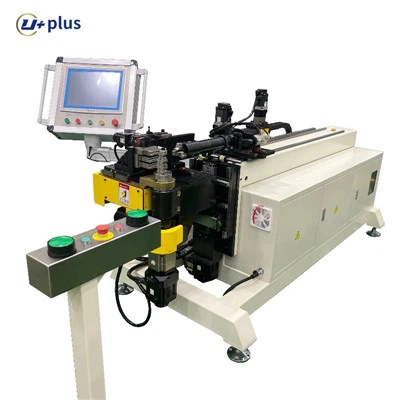
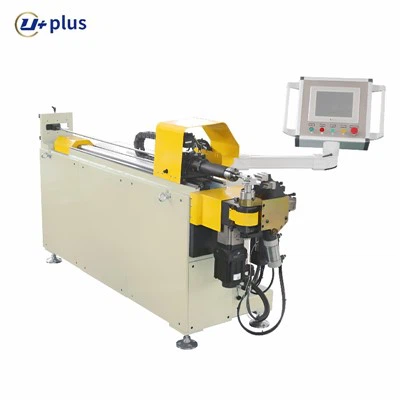
When purchasing HVAC copper tube processing equipment, it is not enough to simply tell the supplier the tube diameter.
The final equipment configuration depends on product dimensions, material condition, required processes, production capacity, and automation level.
The more complete the information provided at the beginning, the easier it is to select the right machine, conduct sample trials, and complete final acceptance.
1. Basic Copper Tube Specifications
The first step is to provide the basic tube data, including:
Outer diameter
Wall thickness
Raw material length
Finished tube length
Coil tube or straight tube
Material grade and hardness condition
Wall thickness and material hardness are especially important because they directly affect bending, expanding, and reducing performance.
If coil tube is used, the equipment may also need decoiling, straightening, feeding, and cutting functions.
2. Complete Product Drawings
It is best to provide 2D or 3D drawings showing:
Overall length
Section dimensions
Bending angles
Bending radii
Tube end structure
Expanding or reducing dimensions
Key tolerances
For multi-bend tubes, the spatial direction between each bend should also be clearly defined.
For complex products, drawings are much more reliable than verbal descriptions alone.
3. Required Processing Operations
Different HVAC copper tube products require different processes.
Common operations include:
Fixed-length cutting
Deburring
Straightening
Tube bending
Expanding
Reducing
Flaring
Punching
Tube end forming
Inspection
For automated equipment, it is also necessary to confirm which processes should be integrated into one machine or production line.
4. Bending and Tube End Forming Parameters
For bending applications, the following information should be provided:
Minimum bending radius
Maximum bending angle
Number of bends per part
Distance between bends
Whether 3D bending is required
For expanding, reducing, or flaring, provide the tube diameter before and after forming, forming length, step dimensions, and fitting requirements.
These parameters directly affect tooling and machine structure.
5. Accuracy Requirements
The supplier also needs to know which dimensions are critical.
Typical requirements include:
Length tolerance
Bending angle tolerance
Expanded or reduced diameter tolerance
Concentricity
Overall spatial tolerance
It is better to clearly identify the dimensions that affect assembly, brazing, or sealing performance rather than requiring maximum precision for every dimension.
6. Production Capacity
Before selecting a machine, it is important to define:
Required hourly output
Daily production volume
Estimated annual volume
Number of working shifts
Seasonal peak demand
Flexible standalone machines are often suitable for low-volume, multi-model production.
For stable high-volume production, automatic feeding, multi-station machines, or complete automated lines may be more suitable.
7. Automation and Inspection Requirements
Automation requirements should also be confirmed in advance, such as:
Manual or automatic loading and unloading
Robot integration
Automatic inspection
Automatic rejection of defective parts
Barcode or QR code traceability
MES system connection
The earlier these requirements are defined, the easier it is to avoid costly modifications later.
8. Provide Physical Samples if Available
If finished parts are already available, it is helpful to provide physical samples together with the drawings.
Samples can help the supplier better evaluate:
Material condition
Bending interference
Tube end structure
Clamping position
Forming difficulty
For complex HVAC tube parts, drawings and samples together usually provide the most accurate basis for machine design.
Recommended Information Checklist
| Item | Information to Provide |
|---|---|
| Tube specification | Outer diameter, wall thickness, length |
| Material | Grade and hardness condition |
| Raw material form | Coil tube or straight tube |
| Product drawing | 2D or 3D drawing |
| Processes | Cutting, bending, expanding, reducing, etc. |
| Accuracy | Key dimensions and tolerances |
| Capacity | Hourly or daily production target |
| Automation | Manual, semi-automatic, or fully automatic |
| Inspection | Dimensional, visual, leak testing, etc. |
| Sample | Recommended if available |
Conclusion
Before purchasing HVAC copper tube processing equipment, the most important step is to clearly define the product and process requirements.
Tube size, material, drawings, required operations, accuracy, production capacity, and automation level all affect the final machine configuration.
The more complete the information provided, the more accurate the equipment selection will be, and the easier it will be to reduce problems during machine trials, modifications, and final acceptance.