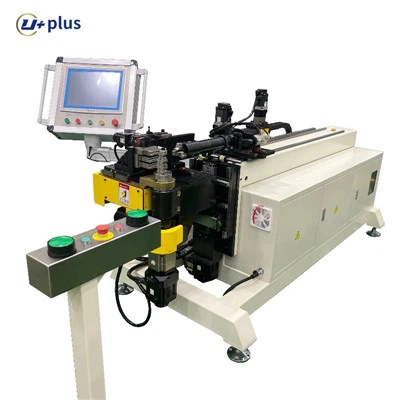
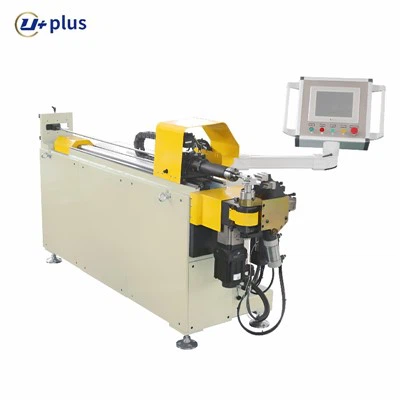
In automated production, equipment layout directly affects production efficiency, floor space, investment cost, maintenance difficulty, and future expansion capability. Two common automation solutions are rotary table automation and linear automation.
Rotary table automation usually uses a circular indexing table or rotary indexing mechanism. Multiple stations are arranged around the table, and the workpiece rotates from one station to the next to complete loading, processing, inspection, and unloading. Linear automation usually uses conveyors, chain conveyors, pallet lines, or robotic transfer systems to move workpieces along a straight production flow.
There is no absolute "better" option between the two. The right choice depends on product structure, number of processes, production cycle time, factory space, and future expansion needs. This article compares rotary table automation and linear automation from the aspects of working principle, application scenarios, efficiency, accuracy, floor space, cost, and maintenance.
1. What Is Rotary Table Automation?
Rotary table automation uses a rotary indexing table as the core. Multiple processing or assembly stations are arranged around the table. The workpiece is fixed on a fixture, and each time the table indexes, the workpiece moves to the next station to complete the corresponding process.
Common stations include:
Automatic loading
Workpiece positioning
Drilling
Tapping
Expanding
Reducing
Press fitting
Brazing
Inspection
Unloading
Rotary table automation is compact, stable in cycle time, and capable of high repeat positioning accuracy. It is suitable for batch processing and assembly of small and medium-sized parts. For production scenarios with fixed processes, stable product structures, and high cycle time requirements, rotary table equipment usually has strong efficiency advantages.
2. What Is Linear Automation?
Linear automation means that workpieces move along a straight production flow and pass through different stations in sequence to complete processing, assembly, inspection, and packaging. Workpieces can be transferred by conveyors, pallets, robotic arms, gantry robots, or industrial robots.
The structure of linear automation is usually more open. Stations can be arranged according to the process flow, making it suitable for longer processes, multiple operations, larger products, or production lines that need to connect with upstream and downstream equipment.
Common applications include:
Automatic assembly lines
Inspection lines
Packaging lines
Electronics production lines
Automotive component assembly lines
Air conditioning and refrigeration pipeline production lines
Heat exchanger production lines
The main advantage of linear automation is strong expandability. It has a clear process flow and can connect more equipment, making it suitable for complex production lines and multi-product manufacturing.
3. Production Efficiency Comparison
The advantage of rotary table automation is that all stations can work at the same time. Each time the table indexes, multiple stations perform different operations simultaneously. Therefore, the overall cycle time is usually determined by the slowest station. If the number of processes is suitable and each station has a similar cycle time, rotary table equipment can achieve very high production efficiency.
For example, an eight-station rotary table machine can complete loading, positioning, processing, inspection, and unloading at the same time. After each rotation, all workpieces move to the next station, creating a very stable production rhythm.
Linear automation can also achieve high efficiency, but it depends more on the conveyor system, station balance, and process matching. If one station is slower than the others, it may cause waiting, accumulation, or bottlenecks. For long production lines, linear automation requires better cycle planning and buffer design.
In general, when the product process is fixed, cycle time is short, and product size is small, rotary table automation usually has higher efficiency. When the process is longer, the product is larger, or multiple processing and assembly stages are required, linear automation is often more suitable.
4. Floor Space Comparison
Rotary table automation usually requires less floor space. Since multiple stations are arranged around a circular table, the overall equipment structure is compact. Workpieces can complete multiple processes within a limited area without needing a long transfer distance.
For customers with limited factory space, rotary table equipment is an attractive solution. It is especially suitable for small metal parts, copper tube fittings, valve parts, hardware parts, and small assembly components. Using rotary table automation can significantly save workshop space.
Linear automation usually requires a longer layout because stations are arranged along a straight line. Products need to move between different stations, and if there are many processes, the production line length will increase significantly. However, linear layout is also more intuitive and easier for operators to observe, maintain, and expand.
If workshop space is limited and the product size is small, rotary table automation has more advantages. If there is enough floor space and the production process is relatively long, linear automation is easier to arrange.
5. Positioning Accuracy and Stability Comparison
Rotary table automation usually provides good repeat positioning accuracy. The workpiece is mounted on a fixed fixture and moves from station to station through indexing. There is no need for frequent re-handling or secondary positioning, which reduces manual errors and transfer errors.
For processes such as drilling, tapping, press fitting, brazing, and inspection, where positioning accuracy is important, rotary table automation offers clear stability advantages. As long as the rotary table accuracy, fixture accuracy, and station adjustment are well controlled, batch consistency can be strong.
The positioning accuracy of linear automation depends on the transfer method and positioning mechanism. If a standard conveyor is used, the workpiece usually needs to be repositioned at each station. If pallet lines, precision locating pins, servo transfer systems, or robots are used, high accuracy can also be achieved, but the structure and control system become more complex.
Therefore, for high-precision multi-station processing of small parts, rotary table automation is usually more stable. For large products or complex assemblies, linear automation can meet accuracy requirements through dedicated positioning systems.
6. Flexibility Comparison
Linear automation usually has more advantages in flexibility. Since stations are arranged in a straight flow, adding, removing, or adjusting stations later is relatively easier. If there are many product types or future process changes, linear automation is more suitable for modular upgrades.
The number of stations and available space in rotary table automation are relatively fixed. For example, an eight-station rotary table normally allows up to eight main stations. If a new process needs to be added later, it may be limited by space and structure. When changing products, fixtures may need to be replaced, stations adjusted, and cycle time re-verified.
However, if the product structure is stable and production volume is high, the limited flexibility of rotary table automation is not necessarily a disadvantage. On the contrary, a fixed structure can provide better cycle stability and lower operation complexity.
So, if the product is stable for a long time, rotary table automation is often more economical and efficient. If there are many product types and frequent changeovers, linear automation is usually more suitable.
7. Cost Comparison
Rotary table automation has a high level of single-machine integration and a compact structure. It can usually complete multiple processes within one machine. For projects with a moderate number of processes and small product size, rotary table automation often has competitive overall cost.
It can reduce the need for conveyors, transfer mechanisms, and floor space, while also reducing the number of operators. If properly designed, rotary table equipment can provide a lower cost per unit of production capacity.
The cost range of linear automation is wider. A simple conveyor line may not be expensive, but if multiple robots, vision systems, buffer mechanisms, precision positioning systems, and complex control systems are required, the total investment can be much higher.
However, linear automation has an advantage in future expansion. If the customer plans to gradually increase capacity or add more processes, a linear layout may better support long-term planning.
Therefore, for short-process, high-cycle, small-part projects, rotary table automation usually has a cost advantage. For long-process, multi-equipment, large-product projects, linear automation may require higher investment, but its overall adaptability is better.
8. Maintenance and Operation Comparison
Rotary table automation has a concentrated structure, with all stations arranged around the table. Operators can perform maintenance and adjustment within a relatively compact area. The equipment is compact and convenient for daily operation and monitoring.
However, rotary table automation also has one characteristic: the internal structure is relatively concentrated. If one station needs maintenance, it may affect the operation of the whole machine. The rotary table, indexer, fixtures, and stations are closely connected, so assembly and maintenance require good precision.
Linear automation usually provides more open maintenance space, and each station is relatively independent. If one station has a problem, local maintenance or bypass solutions may be easier. For large production lines, linear layout allows easier access and segmented maintenance.
However, linear automation often includes more conveyors, positioning units, transfer mechanisms, and sensors, so the total number of maintenance points may also increase.
9. Suitable Product Comparison
Rotary table automation is more suitable for:
Small metal parts
Copper tube fittings
Valve parts
Hardware components
Small press-fit parts
Small brazed assemblies
Stable products for mass production
Products requiring multi-station simultaneous processing
Linear automation is more suitable for:
Large products
Long-process assemblies
Multi-product production
Production lines requiring future expansion
Systems connected with upstream and downstream equipment
Packaging, inspection, and conveying lines
Automotive component and home appliance assembly lines
In the air conditioning, refrigeration, and HVAC industries, small copper tube assemblies, valve parts, and fitting products are more suitable for rotary table automation. Complete unit assembly, long pipeline processing, heat exchanger assembly, and multi-stage inspection lines are more suitable for linear automation.
10. How to Choose the Right Automation Solution
Choosing between rotary table automation and linear automation should not be based only on equipment appearance or single-machine price. It should be judged according to actual production requirements.
If the product is small, the structure is stable, the number of processes is moderate, the cycle time requirement is high, and factory space is limited, rotary table automation is usually the better choice. It can complete multi-process production in a smaller area while maintaining stable batch efficiency.
If the product is large, the process flow is long, there are many product types, future expansion is required, or the equipment needs to form a complete production line with other machines, linear automation is usually more suitable. Its layout is more open and offers greater room for adjustment and expansion.
In actual projects, a hybrid solution can also be used. For example, rotary table equipment can be used at the front end for small part processing or brazing, while a linear conveyor line can be used at the back end for inspection, assembly, and packaging. This approach combines the advantages of both systems and improves overall line efficiency and flexibility.
Conclusion
Rotary table automation and linear automation are both common solutions in modern manufacturing. Rotary table automation offers advantages such as compact structure, stable cycle time, high repeat positioning accuracy, and small floor space. It is suitable for small parts, multi-station processing, and mass production. Linear automation offers advantages such as open layout, strong expandability, and suitability for long processes and multi-product production, especially for large products and complex assembly lines.
When selecting an automation solution, manufacturers should consider product size, number of processes, production cycle time, accuracy requirements, workshop space, investment budget, and future expansion needs. No single solution is suitable for every product. The best solution must be designed according to the actual product process and production goals.
For manufacturers in air conditioning and refrigeration, HVAC, automotive components, electrical equipment, and industrial manufacturing, choosing the right rotary table automation or linear automation solution can improve production efficiency, stabilize product quality, reduce labor costs, and support future intelligent manufacturing upgrades.