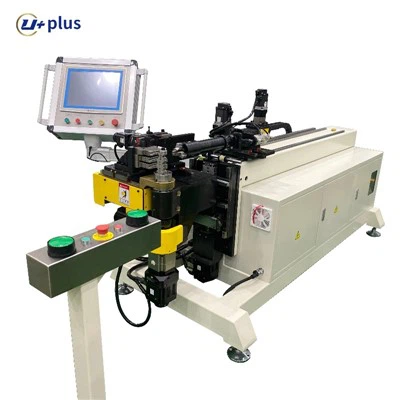
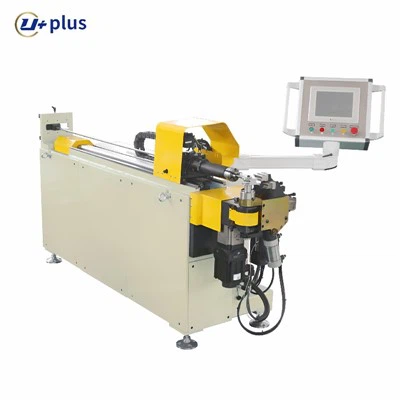
A multi-station processing system is an automated manufacturing solution that integrates multiple processing steps into one machine or one production line. It can complete loading, positioning, clamping, drilling, tapping, milling, pressing, inspection, cleaning, and unloading at different stations at the same time. It is widely used in mass production scenarios such as automotive components, air conditioning and refrigeration parts, hardware parts, valve bodies, pipe fittings, electrical connectors, and home appliance components.
Compared with traditional single-station processing, a multi-station processing system can reduce workpiece handling and repeated clamping, improve production efficiency and product consistency, and has become an important equipment type in modern automated manufacturing.
1. What Is a Multi-Station Processing System?
A multi-station processing system refers to a machine equipped with multiple functional stations. Each station completes one or several processing steps. The workpiece moves through each station in a set sequence until the complete process is finished.
Simply put:
Multi-station processing system = multiple stations + multiple processes + automation control + continuous production.
Common multi-station systems include rotary table multi-station equipment, linear multi-station equipment, chain conveyor multi-station equipment, and robot-integrated multi-station production lines. Among them, rotary table multi-station equipment is compact, stable in cycle time, and especially suitable for mass processing of small and medium-sized parts.
2. Basic Components of a Multi-Station Processing System
A typical multi-station processing system usually includes a feeding mechanism, fixtures, processing units, transfer mechanism, inspection system, control system, and safety protection devices.
The feeding mechanism sends workpieces into the equipment. It can use manual loading, vibratory bowl feeding, manipulator loading, robot loading, or conveyor loading. For mass production, automatic loading can reduce manual involvement and improve production continuity.
Fixtures are used to position and hold the workpiece. Proper fixture design directly affects machining accuracy and product consistency.
Processing units are the core parts that complete specific operations, such as drilling heads, tapping heads, milling units, pressing mechanisms, deburring units, welding units, or inspection modules. Different products can be equipped with different processing units according to process requirements.
The control system coordinates the actions of each station, including feeding, clamping, machining, inspection, alarms, and unloading. Modern multi-station equipment usually uses PLC, servo control, or CNC systems, with a human-machine interface for parameter setting and machine status monitoring.
3. Working Process of a Multi-Station Processing System
The working process of a multi-station processing system is usually clear and organized. First, the workpiece enters the loading station manually or automatically, where the machine completes positioning and clamping. Then, the workpiece is transferred to different processing stations to complete drilling, tapping, chamfering, milling, pressing, or other operations.
In some equipment, multiple stations can work simultaneously. For example, one station may be drilling, another station tapping, a third station inspecting, and a fourth station unloading. This makes full use of machine time, reduces waiting, and improves overall production efficiency.
After processing is completed, the system usually performs dimensional inspection, thread inspection, air tightness testing, or vision inspection. Qualified products move to unloading or assembly, while defective products are separated through alarms, sorting, or rejection mechanisms.
This continuous cycle makes multi-station processing systems highly suitable for standardized, high-volume production.
4. Main Advantages of Multi-Station Processing Systems
The biggest advantage of a multi-station processing system is high efficiency. Traditional processing usually requires several machines to complete different processes separately. Workpieces need to be repeatedly transferred, waited for, and clamped. A multi-station system can integrate multiple processes into one machine, significantly shortening the production cycle.
Multi-station systems also improve product consistency. The workpiece is processed within the same fixture or the same automated flow, reducing manual clamping and transfer errors. This improves dimensional stability and makes batch quality easier to control.
Another advantage is lower labor cost. The equipment can automatically complete loading, processing, inspection, and unloading. Operators mainly handle machine monitoring, material replenishment, and abnormal situations, instead of repeatedly performing a single process for long periods.
In addition, multi-station equipment is usually compact and saves workshop space. For parts requiring multiple processes, one multi-station machine can often replace several single-purpose machines, making the production site cleaner and material flow smoother.
5. Common Types of Multi-Station Processing Systems
Multi-station processing systems can be designed in different forms according to product structure, process flow, and production capacity requirements.
Rotary table multi-station systems use a rotary table as the core. The workpiece indexes with the table and enters different processing stations in sequence. This structure has a small footprint and stable cycle time, making it suitable for valve bodies, fittings, hardware parts, pipe components, and electrical parts.
Linear multi-station systems use a linear transfer method. Workpieces move along the production line and enter each station in sequence. This type is suitable for products with many processes, larger dimensions, or applications that need to connect with upstream and downstream production lines.
Chain or pallet-type multi-station systems transfer workpieces through chains, pallets, or conveyor modules. They are suitable for multi-specification products and more complex assembly or processing flows.
Robot-integrated multi-station systems use robots for loading, unloading, handling, flipping, and positioning. They can be combined with machining equipment, inspection equipment, and welding equipment, making them suitable for flexible production.
No structure is absolutely better than another. The key is to choose the right system according to product size, number of processes, cycle time requirements, and automation level.
6. What Processes Can Multi-Station Systems Integrate?
Multi-station processing systems can integrate many machining and assembly processes, including:
- Automatic loading
- Positioning and clamping
- Drilling
- Tapping
- Milling
- Chamfering
- Hole expanding
- Reaming
- Pressing
- Riveting
- Deburring
- Cleaning and chip blowing
- Welding or brazing
- Air tightness testing
- Vision inspection
- Automatic unloading
For complex parts, multi-station systems can combine processing, assembly, and inspection to reduce intermediate handling and improve overall line efficiency.
7. Applications of Multi-Station Processing Systems
Multi-station processing systems are suitable for many mass production industries.
In the automotive component industry, they are commonly used for valve bodies, housings, fittings, brackets, sensor parts, and connectors. Automotive components often require high dimensional consistency and stable cycle time, and multi-station systems can meet these mass production requirements.
In the air conditioning and refrigeration industry, multi-station systems can be used for pipeline fittings, valve parts, copper tube fittings, distributors, pressed parts, and connection assemblies. By integrating processing and inspection, product reliability can be improved.
In the hardware and mechanical parts industry, multi-station equipment is suitable for drilling, tapping, chamfering, milling, and multi-face machining. For standard parts and mass-produced components, multi-station systems can significantly improve efficiency.
In the electrical and electronics industry, they can be used for terminals, connectors, motor components, switch parts, and conductive parts, helping manufacturers achieve stable and efficient production.
8. Key Factors Affecting Multi-Station System Performance
The performance of a multi-station processing system depends not only on the machine itself, but also on process planning, fixture design, station layout, and the control system.
First, station planning is important. The processing time of each station should be balanced as much as possible. If one station takes too long, it becomes the cycle-time bottleneck of the entire machine. Therefore, processes should be distributed reasonably during the design stage.
Second, fixture design is critical. Fixtures must ensure accurate positioning, stable clamping, easy loading and unloading, and suitability for long-term mass production. Unstable fixtures directly lead to dimensional deviation and inconsistent products.
Third, machine rigidity and processing unit stability matter. Processes such as drilling, tapping, and milling require rigid power heads, accurate spindles, and stable feeding. Insufficient machine rigidity may cause vibration, hole position deviation, or rapid tool wear.
Finally, the control system and inspection capability are also important. A high-quality multi-station system should provide stable motion control, alarm protection, parameter management, and necessary online inspection functions, making production management and quality tracking easier.
9. How to Choose the Right Multi-Station Processing System
When choosing a multi-station processing system, companies should first clarify the product structure and process flow. Workpiece size, material, number of machining surfaces, machining accuracy, cycle time, production capacity target, and inspection requirements should all be analyzed.
If the product is single and production volume is high, a dedicated multi-station machine with faster cycle time and a more compact structure may be selected. If there are many product specifications and frequent changeovers are required, equipment flexibility, fixture changeover efficiency, and program management capability should be considered.
It is also important to consider future upgrade possibilities. For example, whether the system can add inspection stations, automatic loading modules, robot loading and unloading, data collection, or MES connection.
A suitable multi-station system is not simply about putting several processes together. It should match the process flow, machine structure, fixture positioning, cycle time, and inspection method as a complete solution.
Conclusion
A multi-station processing system is an efficient, stable, and mass-production-oriented automation solution. By coordinating multiple stations, it integrates multiple processes into one machine or one production line, improving production efficiency, reducing repeated clamping, lowering labor costs, and improving product consistency.
For industries such as automotive components, air conditioning and refrigeration parts, hardware and mechanical parts, pipe fittings, valve bodies, electrical connectors, and home appliance components, multi-station processing systems can help manufacturers achieve more efficient, stable, and automated production.
When selecting equipment, companies should consider product structure, process requirements, production capacity targets, and future automation plans. Proper design of station quantity, fixture solutions, processing units, and inspection methods is essential. Only when the system design matches actual production needs can a multi-station processing system truly deliver its value.