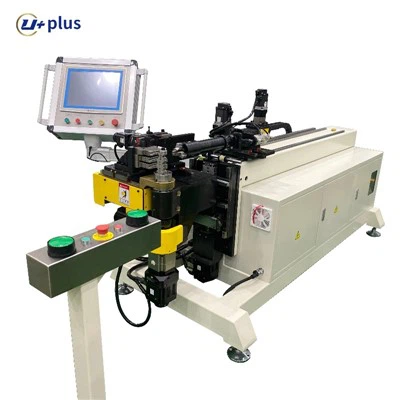
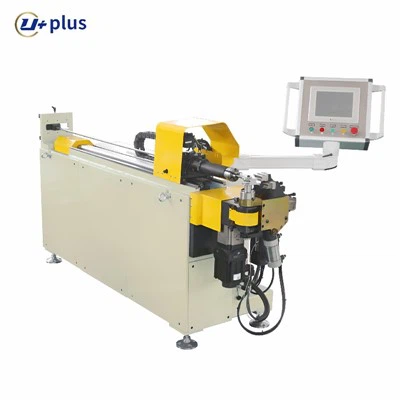
As the air conditioning, refrigeration, HVAC, and heat pump industries place greater emphasis on production efficiency, product consistency, and labor cost control, more manufacturers are considering upgrading their copper tube cutting, bending, expanding, reducing, punching, brazing, and inspection equipment.
However, when investing in new equipment, the purchase price should not be the only consideration. The more important questions are: How much labor can the equipment save? How much can production capacity increase? How much material waste and rework can be reduced? And how long will it take to recover the investment?
Therefore, the return on investment of air conditioning pipeline processing equipment should be evaluated from multiple aspects, including equipment cost, labor savings, production efficiency, product quality, material utilization, maintenance cost, and future capacity requirements.
1. Why Is ROI Analysis Important?
In traditional air conditioning pipeline production, many processes still rely on manual or semi-automatic operations, such as:
Manual measuring and tube cutting
Manual tube bending
Manual expanding and reducing
Manual material handling
Manual brazing
Manual dimensional inspection
This production method usually requires lower initial equipment investment, but as production volume increases, labor costs, rework costs, and management costs also continue to rise.
Automated equipment requires a higher initial investment, but over the long term it can reduce unit manufacturing costs by lowering labor requirements, increasing output, reducing scrap, and improving product consistency.
The key question is not simply whether the equipment is expensive.
The real question is:
Can the equipment reduce the cost per product and improve production capacity over the long term?
2. What Costs Should Be Included in the Investment?
When calculating equipment investment, manufacturers should not consider only the machine purchase price.
A complete investment may include:
Equipment purchase cost
Fixtures and tooling
Dies and molds
Automatic feeding systems
Inspection equipment
Installation and commissioning
Factory layout modification
Operator training
Maintenance and spare parts
For automated production lines, additional investment may include:
Robots
Conveyor systems
Safety protection systems
PLC control systems
MES interfaces
Automatic inspection systems
Therefore, different solutions should be compared based on the total project investment rather than only the quotation of a single machine.
3. Labor Savings Are the Most Direct Return
For air conditioning pipeline manufacturers, labor savings are often the easiest part of ROI to calculate.
In traditional production, tube cutting, bending, expanding, reducing, brazing, and inspection may require separate operators.
With automated equipment, several processes can be integrated into one system, for example:
Automatic feeding → fixed-length cutting → deburring → bending → tube end forming → inspection → unloading
Processes that previously required several operators may only need a small number of workers for equipment supervision, material loading, changeover, and quality confirmation.
Automation can also reduce:
Operator training costs
Dependence on skilled workers
Production disruption caused by labor turnover
Overtime costs
Labor management costs
For high-volume manufacturers, labor savings are often one of the most important sources of return on automation investment.
4. Benefits from Higher Production Efficiency
The second major source of return is increased production capacity.
Manual processing often involves:
Variable operating speed
Waiting between processes
Manual handling
Repeated positioning
Long material changeover time
Automated equipment can reduce these losses through continuous production and multi-process integration.
For example, a multi-station machine can perform several processes at the same time, such as:
Cutting
Expanding
Reducing
Punching
Inspection
Compared with processing each step separately, an integrated system can significantly shorten the production cycle.
If a manufacturer is currently limited by insufficient capacity, automation does more than reduce costs. It can also allow the company to accept more orders.
The additional profit generated by increased capacity should also be included in ROI calculations.
5. Reducing Material Waste
Copper tube is one of the main raw materials used in air conditioning pipeline production, and its material cost is relatively high. Therefore, material utilization has a direct impact on manufacturing cost.
Traditional processing may result in:
Cutting length errors
Excessive tail material
Scrap from bending defects
Expansion cracking
Incorrect reducing dimensions
Surface scratches caused by manual handling
High-precision automated equipment can reduce scrap through:
Accurate feeding
Fixed-length control
Automatic compensation
Stable clamping
Standardized process parameters
For high-volume manufacturers, even a small reduction in material waste per component can create significant annual savings.
6. Reducing Rework and Scrap Costs
Air conditioning pipeline processing quality directly affects downstream assembly and brazing.
If upstream dimensions are incorrect, the following problems may occur:
Tubes cannot be assembled properly
Brazing gaps become inconsistent
Pipeline positions are incorrect
Leak tests fail
Products require rework
Rework increases not only material cost, but also labor, equipment, and inspection costs.
Automated equipment improves batch consistency by stabilizing processing parameters.
For example:
CNC bending machines can automatically compensate for springback.
Servo-controlled end forming equipment can improve expanding and reducing accuracy.
Online inspection systems can detect abnormal products before they move to downstream processes.
This helps prevent defective parts from entering more expensive production stages.
7. Long-Term Value from Better Product Quality
The financial value of improved product quality is more difficult to calculate than direct labor savings, but it is extremely important over the long term.
Stable pipeline processing can help reduce:
Brazing leakage
Assembly difficulties
After-sales repairs
Customer complaints
Batch quality problems
For export products and major air conditioning manufacturers, product consistency and reliability are especially important.
If automated equipment helps reduce after-sales problems and customer complaints, the long-term value can be greater than the direct labor savings alone.
8. ROI of Automated Brazing Equipment
Brazing is one of the processes with relatively high labor costs and quality risks in air conditioning pipeline production.
Traditional manual flame brazing requires skilled operators, and brazing quality may be affected by:
Operator experience
Flame position
Heating time
Filler metal quantity
Operator working condition
Automatic flame brazing, induction brazing, or robotic brazing can provide more stable control over:
Heating time
Heating power
Brazing position
Filler metal quantity
Cooling process
Although automated brazing equipment requires a higher initial investment, it can offer strong long-term returns in mass production by reducing labor dependence, rework, and leakage problems.
9. Equipment Utilization Directly Affects ROI
The same machine may generate very different returns in different factories.
One major reason is equipment utilization.
If a machine operates only a few hours per day, the payback period will usually be longer.
If the equipment runs continuously for two or three shifts per day, the labor and productivity benefits are used much more fully, allowing faster investment recovery.
Therefore, ROI analysis should consider:
Daily operating hours
Annual working days
Actual equipment utilization
Stability of customer orders
For manufacturers with unstable production volumes, it may not be necessary to invest in a fully automated production line immediately. A modular automation strategy may provide a better balance between flexibility and investment.
10. How to Calculate Equipment ROI
A simple ROI model can be used in actual projects:
Annual Benefit = Labor Savings + Material Savings + Reduced Rework + Profit from Additional Capacity - Annual Maintenance Cost
Then:
Payback Period = Total Equipment Investment ÷ Annual Net Benefit
For example, after installing an automated pipeline processing system, a manufacturer may save money each year through:
Lower labor costs
Less material waste
Reduced scrap and rework
Less production waiting time
At the same time, the equipment may increase production capacity.
After combining these benefits and subtracting maintenance, electricity, and consumable costs, the manufacturer can estimate the actual payback period.
It is better to use conservative production data rather than the theoretical maximum performance of the equipment.
11. Which Manufacturers Are More Suitable for Automation Investment?
Automated pipeline processing equipment is especially suitable for the following types of manufacturers.
1. High Production Volume
The higher the production volume, the higher the equipment utilization and the more obvious the ROI.
2. Relatively Standardized Products
Standardized products are easier to integrate with automatic feeding, processing, and inspection systems.
3. Continuously Increasing Labor Costs
When skilled workers become more difficult to recruit or retain, automation can reduce long-term dependence on labor.
4. High Product Consistency Requirements
Export products, large OEM customers, and higher-end air conditioning products usually require more stable dimensions and lower leakage rates.
5. Existing Production Capacity Is Insufficient
If current manual production can no longer support order growth, automation can solve both capacity and labor problems at the same time.
12. Is Automation Worthwhile for Small-Batch Production?
Highly automated production is not always the best solution for every manufacturer.
If a company mainly produces:
Many product types
Small production batches
Frequently changing products
Unstable orders
then a highly dedicated automatic production line may have relatively low utilization.
In this case, manufacturers may be better suited to:
Flexible CNC equipment
Quick-change tooling
Modular automation
Semi-automatic machines
Programmable robots
This allows the company to reduce labor while maintaining production flexibility.
Therefore, ROI analysis must be based on the actual production model rather than assuming that a higher level of automation is always better.
13. Equipment Selection Affects the Final Return
Two machines with different purchase prices cannot be compared only by initial cost.
Manufacturers should also compare:
Actual cycle time
Product qualification rate
Automation level
Changeover time
Energy consumption
Maintenance cost
Tooling and die life
Number of required operators
After-sales service
Equipment stability
A lower-priced machine with frequent failures and poor productivity may create a higher long-term cost.
In contrast, a more expensive machine with stable operation, lower labor requirements, and higher production capacity may generate a better long-term return.
14. A Phased Automation Upgrade Strategy
For manufacturers considering automation upgrades, a phased investment approach can be a practical solution.
The first stage can focus on processes with the highest labor costs or the most frequent quality problems, such as:
Automatic tube cutting
CNC tube bending
Automatic expanding and reducing
The second stage can add:
Automatic loading and unloading
Automated brazing
Online inspection
The third stage can further integrate:
Robots
Automated logistics
MES production management systems
This approach reduces the pressure of a large one-time investment and allows manufacturers to verify the ROI of each stage using actual production data.
Conclusion
The return on investment of air conditioning pipeline processing equipment should not be evaluated based only on the purchase price.
Manufacturers should consider labor costs, production efficiency, material waste, rework rates, product quality, equipment utilization, maintenance costs, and future capacity requirements.
For high-volume and relatively standardized air conditioning pipeline production, automatic tube cutting, CNC tube bending, automatic end forming, multi-station processing, automated brazing, and online inspection can create strong long-term value by reducing labor, increasing efficiency, and lowering defect rates.
For manufacturers with high product variety and lower batch sizes, flexible and modular automation may provide a better solution.
The best equipment investment is not necessarily the cheapest machine or the system with the highest level of automation.
It is the solution that best matches the manufacturer's products, production volume, process requirements, and long-term business strategy.