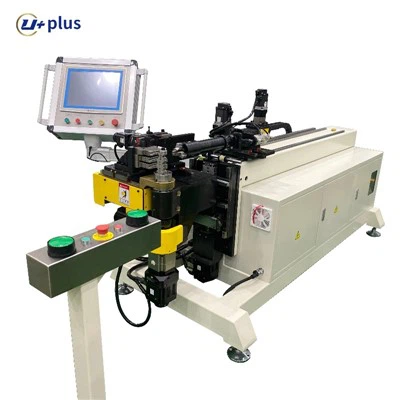
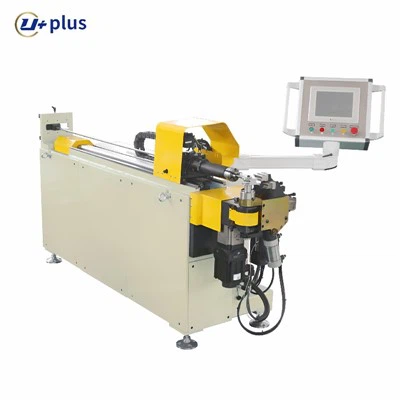
Copper tube expanding and reducing are important end-forming processes widely used in air conditioning, refrigeration, HVAC, heat exchangers, and pipeline component manufacturing. By changing the diameter and shape of the copper tube end, these processes enable pipeline connection, brazing positioning, sealing assembly, and transition between different tube sizes.
In actual production, the quality of tube expanding and reducing directly affects assembly accuracy, brazing quality, sealing performance, and product reliability. If process parameters are not properly controlled, problems such as cracking, deformation, uneven wall thickness, dimensional deviation, and leakage may occur.
With the development of automated manufacturing, traditional manual expanding and reducing processes are gradually being replaced by CNC equipment, multi-station machines, and automated production lines, achieving higher accuracy, efficiency, and batch consistency.
1. What Is Copper Tube Expanding?
Copper tube expanding refers to a forming process that increases the diameter of the tube end using specialized tools or dies, creating a flared, tapered, or enlarged connection area.
Expanded copper tubes are commonly used for:
Pipeline connections
Flare fittings
Valve connections
Refrigeration system assembly
Brazing positioning
In the air conditioning and refrigeration industry, tube expanding is widely used. For example, when connecting copper tubes with valves, fittings, or other components, the expanded end provides a stable assembly structure.
Tube expanding not only requires accurate dimensions but also requires uniform wall thickness in the expanded area to prevent leakage during installation or brazing.
2. What Is Copper Tube Reducing?
Copper tube reducing is a forming process that decreases the diameter of the tube end through pressing, forming, or rotary shrinking methods.
Tube reducing is mainly used for:
Connecting different tube diameters
Inserting tube ends into fittings
Improving positioning accuracy
Reducing brazing gaps
Changing pipeline structures
For example, in air conditioning pipeline assemblies, larger diameter copper tubes are often reduced to smaller connection ends to meet system design requirements.
Compared with cutting processes, tube reducing is a low-waste or non-cutting forming method that maintains better material continuity and reduces material loss.
3. Working Principle of Copper Tube Expanding and Reducing
Copper tube expanding and reducing are both based on the plastic deformation characteristics of metal. External force is applied to permanently reshape the copper tube.
Tube Expanding Process:
Copper tube positioning and clamping
Tube end enters the expanding die
The tool or mandrel applies pressure
The tube end expands outward
The tool retracts after reaching the target dimension
Tube Reducing Process:
Copper tube positioning
Tube end enters the reducing die
The die compresses the tube diameter gradually
Material flows along the axial direction
A stable reduced diameter is formed
Copper has excellent ductility, making it suitable for expanding and reducing processes. However, excessive deformation may cause cracks or processing defects.
4. Key Factors Affecting Expanding and Reducing Quality
1. Copper Tube Material Condition
The material condition of copper tubes directly affects forming performance.
Common copper tube conditions include:
Soft copper tube
Semi-hard copper tube
Hard copper tube
Soft copper has better ductility and is easier to expand and bend. Hard copper has higher strength but is more difficult to form.
If the material hardness is too high, cracks may occur during expanding or reducing. Therefore, the appropriate copper tube condition should be selected according to the forming requirements.
2. Tube Wall Thickness
Wall thickness is another important factor affecting forming quality.
If the wall thickness is too thin:
Deformation may occur easily
Expanded sections may lose strength
Cracking risk increases
If the wall thickness is too thick:
Higher forming force is required
Equipment load increases
Processing efficiency decreases
Therefore, proper wall thickness should be selected according to tube diameter, connection method, and operating pressure requirements.
3. Die Design
The expanding and reducing dies directly determine the final dimensional accuracy.
Good die design should consider:
Forming angle
Die surface finish
Guide structure
Material flow direction
Demolding method
Poor die design may cause:
Tube end misalignment
Unstable dimensions
Surface scratches
Uneven wall thickness
For automated production, dedicated die design is essential for long-term stable operation.
4. Processing Parameters
Main forming parameters include:
Forming speed
Pressure level
Number of forming steps
Holding time
Lubrication conditions
If the forming speed is too fast, material flow may be insufficient and cracks may occur. Excessive pressure may damage the tube wall.
For mass production, optimal parameters should be determined through process testing and standardized management.
5. Common Copper Tube Expanding Problems and Solutions
1. Expansion Cracking
Expansion cracking is one of the most common problems.
Main causes:
Excessive material hardness
Too much expansion ratio
Poor die surface quality
Tube end scratches
Insufficient lubrication
Solutions:
Select suitable material condition
Reduce deformation per operation
Improve die surface quality
Strengthen tube inspection
Optimize lubrication methods
2. Unstable Expansion Dimensions
This occurs when expanded diameter, height, or angle varies between products.
Causes:
Die wear
Incorrect positioning
Pressure variation
Copper tube dimensional variation
Solutions:
Regularly inspect die dimensions
Use precision positioning fixtures
Control incoming tube dimensions
Add online inspection systems
3. Surface Scratches After Expansion
Surface scratches affect appearance and may create potential leakage risks.
Causes:
Damaged die surfaces
Excessive friction between tube and die
Contamination on tube ends
Solutions:
Maintain dies regularly
Keep the forming area clean
Improve lubrication conditions
6. Common Copper Tube Reducing Problems and Solutions
1. Wall Thinning After Reducing
During reducing, uneven material flow may cause local wall thickness reduction.
Causes:
Excessive reducing ratio
Excessive forming speed
Improper die design
Solutions:
Control reducing ratio
Use multi-step reducing processes
Optimize die structure
2. Reducing Eccentricity
After reducing, the centerline may shift, affecting later assembly and brazing.
Causes:
Poor workpiece positioning
Excessive fixture clearance
Insufficient die guidance
Solutions:
Improve fixture positioning accuracy
Add guide structures
Calibrate equipment regularly
3. Reducing Cracking
Reducing cracks usually occur when deformation is too large.
Causes:
Insufficient material ductility
Excessive reducing ratio
Severe work hardening
Solutions:
Select suitable copper tube materials
Use multiple reducing steps
Apply intermediate annealing when necessary
7. Development of Automated Expanding and Reducing Technology
With the growth of air conditioning and refrigeration industries, automated copper tube end-forming equipment is becoming increasingly common.
Modern automated tube forming equipment can achieve:
Automatic feeding
Automatic positioning
Automatic clamping
Automatic expanding
Automatic reducing
Automatic inspection
Automatic unloading
Compared with manual processing, automated equipment provides:
Higher dimensional consistency
More stable production cycle
Lower labor cost
Lower defect rate
Better production data tracking
For large-volume copper tube component production, automated expanding and reducing equipment can be integrated with bending machines, cleaning systems, brazing equipment, and inspection systems to create complete production lines.
8. Relationship Between Expanding/Reducing and Brazing
The quality of copper tube expanding and reducing directly affects subsequent brazing performance.
If expansion dimensions are inaccurate:
Assembly clearance becomes unstable
Filler metal flow becomes inconsistent
Leakage risk increases
If reducing dimensions are unstable:
Insertion depth varies
Brazing position changes
Product consistency decreases
Therefore, in automated production, tube expanding and reducing should be designed together with the brazing process rather than considered separately.
Proper end forming improves brazing quality, reduces rework, and minimizes leakage risks.
9. How to Select the Right Expanding and Reducing Equipment
When selecting equipment, manufacturers should consider:
Copper tube diameter range
Wall thickness range
Required forming type
Production cycle time
Accuracy requirements
Automation level
Need for online inspection
For small-batch production with multiple specifications, flexible CNC equipment may be more suitable.
For large-volume production in air conditioning and refrigeration industries, automated multi-station equipment is preferred to improve efficiency and stability.
Equipment selection should not only meet current production requirements but also consider future product upgrades and capacity expansion.
Conclusion
Copper tube expanding and reducing are key processes in air conditioning, refrigeration, and HVAC pipeline manufacturing. High-quality end forming improves assembly accuracy, ensures brazing quality, and reduces leakage risks.
The quality of expanding and reducing depends on material condition, tube wall thickness, die design, processing parameters, and equipment accuracy. With the development of automation and intelligent manufacturing, automated tube expanding and reducing equipment is becoming an important solution for high-volume copper tube processing.
For manufacturers requiring high efficiency and consistent quality, integrating expanding, reducing, bending, brazing, and inspection processes into an automated production line can significantly improve productivity, reduce costs, and enhance product competitiveness.