Air conditioning pipelines are important components of refrigeration systems. They are mainly responsible for refrigerant transportation, heat exchange connection, and system circulation. Air conditioning pipelines are usually made of copper, aluminum, or, in some cases, steel tubes. Among them, copper tubes are the most widely used. The quality of pipeline processing directly affects sealing performance, cooling efficiency, operating stability, and service life of the air conditioning system.
In actual production, air conditioning pipeline processing involves multiple processes, including cutting, deburring, tube bending, expanding, reducing, punching, cleaning, brazing, and inspection. If any process is not properly controlled, problems such as dimensional deviation, deformation, leakage, poor brazing quality, or assembly difficulty may occur.
This article analyzes common problems in air conditioning pipeline processing, explains their causes, and introduces practical solutions to help manufacturers improve processing quality and production stability.
1. Inaccurate Cutting Length
Cutting is the first process in air conditioning pipeline processing. Whether the cutting length is accurate directly affects subsequent bending, assembly, and brazing positions.
Common problems include:
Tube length is too long or too short
Large dimensional variation within the same batch
Inconsistent assembly positions
Unstable brazing clearance
Inaccurate cutting length is usually caused by insufficient feeding accuracy, worn positioning devices, improper cutting parameters, bent incoming tubes, or long-term lack of equipment calibration.
The solution is to use high-precision automatic feeding and fixed-length cutting equipment, and regularly calibrate the feeding system. For mass production, first-piece inspection and in-process sampling should be established to ensure stable tube length. If incoming tubes are bent or deformed, straightening should be performed before cutting.
2. Excessive Burrs at Tube Ends
After copper tube cutting, burrs are often generated on the inner and outer edges of the tube end. If burrs are not removed properly, they may affect pipeline assembly, refrigerant flow, and subsequent brazing quality.
Excessive burrs may cause:
Difficulty in tube insertion
Damage to sealing surfaces
Abnormal brazing clearance
Internal residue inside the tube
Increased risk of system blockage during operation
The causes include worn cutting tools, improper cutting speed, unstable tube clamping, unsuitable cutting method, or insufficient deburring.
The solution is to regularly inspect and replace cutting tools, and properly set cutting speed and clamping force. After cutting, both internal and external deburring should be performed. If necessary, air blowing, cleaning, or online cleaning equipment can be added to ensure there is no obvious residue inside the tube.
3. Tube Bending Angle Deviation
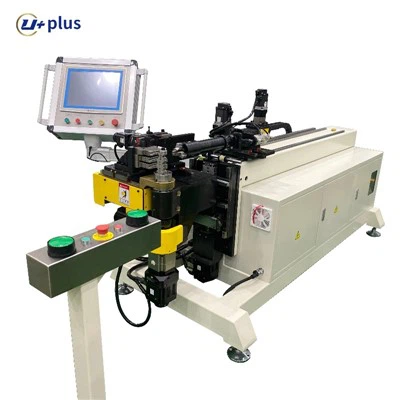
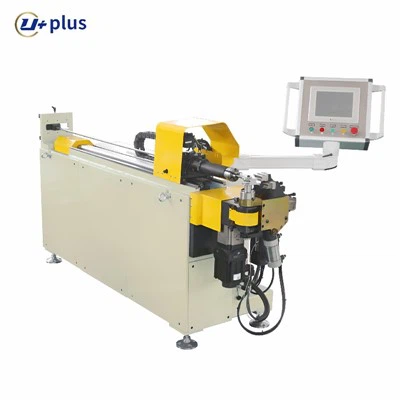
Tube bending is one of the most critical processes in air conditioning pipeline processing. Since the internal space of air conditioning units is limited, pipelines usually need to be bent at specific angles and directions. If the bending angle is inaccurate, assembly position and overall product structure may be affected.
Common issues include:
Bending angle is too small or too large
Position deviation in multi-bend tubes
Pipeline cannot be installed accurately
Interference with other components
Bending angle deviation may be caused by insufficient bending machine accuracy, inaccurate springback compensation, material hardness variation, unstable fixture positioning, or incorrect program settings.
The solution is to use CNC tube bending equipment and establish proper springback compensation parameters according to the copper tube material condition. During production, bending angle and spatial dimensions should be checked regularly, and parameters should be adjusted when material batches change.
4. Wrinkling or Deformation During Bending
During tube bending, if the tube is not properly supported or the force is uneven, wrinkles may appear on the inner side of the bend, while thinning may occur on the outer side. Severe deformation may affect refrigerant flow and tube strength.
Common problems include:
Wrinkles on the inner bend
Oval deformation of the tube section
Local wall thinning
Collapse at the bending area
These problems are usually caused by too small a bending radius, thin tube wall, insufficient mandrel support, improper clamp die design, insufficient lubrication, or excessive bending speed.
The solution is to select a proper bending radius and configure suitable mandrels, clamp dies, and guide dies according to tube diameter and wall thickness. For thin-wall copper tubes, support and lubrication should be carefully controlled to avoid excessive deformation. Before mass production, bending parameters should be verified through sample testing.
5. Cracking During Tube Expanding
Tube expanding is a common end-forming process used in air conditioning pipeline connections. If cracks appear in the expanded area, sealing performance and assembly reliability will be directly affected.
Expansion cracking is usually related to:
Excessive copper tube hardness
Too large expansion ratio
Scratches at the tube end
Rough die surface
Insufficient lubrication
Excessive forming speed
The solution is to select a copper tube material condition suitable for forming and avoid using overly hard or severely work-hardened tubes. Tube ends should be inspected before expanding to remove obvious scratches and burrs. The die surface should be smooth, and the forming speed and deformation amount should be properly controlled. For larger expansion ratios, multi-step forming can be used.
6. Unstable Reducing Dimensions
Tube reducing is used to connect different tube diameters or create insert-type assembly structures. Unstable reducing dimensions may cause inconsistent insertion depth, changing brazing clearance, and assembly difficulty.
Common problems include:
Reduced outer diameter deviation
Inconsistent reducing length
Poor concentricity
Unsmooth tube insertion
Unstable reducing dimensions may be caused by die wear, inaccurate fixture positioning, pressure fluctuation, material hardness variation, or excessive deformation in one forming step.
The solution is to regularly inspect reducing dies and fixtures, and control incoming tube dimensions and hardness. For high-precision products, servo-controlled or CNC tube end forming equipment should be used to improve repeatability. Online dimensional inspection can also be added when necessary to detect abnormalities in time.
7. Eccentric Tube End Forming
Eccentric tube end forming affects subsequent insertion, brazing, and sealing performance. Severe eccentricity may cause pipeline misalignment or even brazing leakage.
Main causes include:
Insufficient tube clamping
Misalignment between fixture center and die center
Insufficient die guiding
Bent tube material
Equipment accuracy degradation after long-term use
The solution is to improve fixture positioning accuracy and ensure that the tube, die, and forming axis remain aligned. Equipment centerlines should be calibrated regularly, and fixture wear should be checked. For long tubes or easily deformed tubes, auxiliary support structures should be added.
8. Surface Scratches on Pipelines
Surface scratches on air conditioning pipelines not only affect appearance but may also become potential corrosion or leakage points. In brazing or sealing areas, surface damage can also affect joint quality.
Common causes include:
Friction during transportation
Rough fixture surfaces
Damaged dies
Improper part stacking
Collision during handling
The solution is to keep fixtures, dies, and conveying paths clean and smooth, and avoid direct contact between hard objects and copper tube surfaces. During workpiece transfer, dedicated trays or protective separators should be used to prevent collision between parts. For automated production lines, feeding mechanisms and positioning fixtures should be checked for scratch points.
9. Insufficient Internal Cleanliness
The internal cleanliness of air conditioning pipelines is very important for system stability. If copper chips, oil, moisture, oxides, or other impurities remain inside the tube, refrigerant flow may be affected, and system blockage or component damage may occur.
Common contamination sources include:
Copper chips left after cutting
Incomplete deburring
Residual processing oil or lubricant
Insufficient drying after cleaning
Contaminated storage environment
The solution is to strengthen control over cutting, deburring, and cleaning processes. For products with higher cleanliness requirements, air blowing, ultrasonic cleaning, drying equipment, or internal cleanliness inspection can be used. Finished tubes should be protected from dust and moisture, and tube ends should be sealed when necessary.
10. Brazing Leakage
Brazing leakage is one of the most serious problems in air conditioning pipeline processing. It directly affects the airtightness and service life of the complete unit.
Possible causes include:
Improper joint clearance
Insufficient filler metal flow
Uneven heating
Oil or oxide layers on the surface
Unsuitable flux
Brazing temperature too high or too low
Unstable tube end dimensions
The solution should start from upstream processing. Cutting, expanding, reducing, and assembly dimensions must be stable to ensure that joint clearance is suitable for filler metal flow. Surfaces should be cleaned before brazing, and suitable filler metals and flux should be selected. For mass production, automated brazing or induction brazing is recommended to improve heating stability and joint consistency.
11. Pipeline Assembly Difficulty
Pipeline assembly difficulty is usually not caused by a single process, but by the accumulation of multiple processing errors.
Common problems include:
Tube cannot be inserted properly
Holes or interfaces do not align
Pipeline interferes with other components
Manual adjustment is required during assembly
Brazing position is unstable
The causes may come from cutting length, bending angle, tube end forming size, fixture positioning, and incoming material variation.
The solution is to establish a complete dimensional control system. Key dimensions should be inspected during processing, rather than waiting until final assembly to find problems. For complex pipeline assemblies, dedicated gauges, 3D inspection, or online inspection equipment can be used to improve assembly consistency.
12. Poor Batch Consistency
Poor batch consistency is a common but often overlooked problem in air conditioning pipeline processing. A single product may appear qualified, but dimensional, angular, appearance, or brazing quality variation within the same batch can affect downstream assembly and production efficiency.
Main causes include:
High proportion of manual operation
Unstable equipment parameters
Fixture wear
Insufficient die life management
Incoming material variation
Lack of in-process inspection
The solution is to improve automation and reduce the influence of operator experience on product quality. Key equipment should have standardized parameters, and dies and fixtures should be maintained regularly. During production, key data such as cutting length, bending angle, end-forming dimensions, brazing parameters, and inspection results should be recorded to improve batch stability through data management.
13. How to Reduce Problems in Air Conditioning Pipeline Processing
To reduce pipeline processing problems, manufacturers need systematic control from four aspects: process, equipment, materials, and management.
First, the process flow must be reasonable. Cutting, deburring, bending, end forming, cleaning, brazing, and inspection should be matched with each other, instead of optimizing only one single process.
Second, equipment accuracy must remain stable. Automatic tube cutting machines, CNC bending machines, tube end forming machines, and brazing equipment should be maintained and calibrated regularly.
Third, material quality must be controlled. Copper tube outer diameter, wall thickness, hardness, surface quality, and cleanliness all affect processing results.
Fourth, quality inspection should be moved forward. Manufacturers should not rely only on final leak testing. Dimensional inspection, appearance inspection, and in-process sampling should be added at key processes.
For mass production, automated production lines, multi-station processing equipment, online inspection systems, and data tracking systems are important tools for improving pipeline processing quality.
Conclusion
Common problems in air conditioning pipeline processing include inaccurate cutting length, excessive burrs, bending angle deviation, bending deformation, expansion cracking, unstable reducing dimensions, eccentric tube end forming, surface scratches, internal contamination, brazing leakage, assembly difficulty, and poor batch consistency.
These problems are usually not isolated. They are the result of combined effects from materials, equipment, dies, process parameters, and quality management. To improve air conditioning pipeline processing quality, manufacturers need systematic optimization from upstream processing to downstream inspection.
By using automatic tube cutting, CNC tube bending, automatic expanding and reducing, automated brazing, online inspection, and data tracking technologies, manufacturers can effectively reduce processing defects, improve production efficiency, and ensure long-term stable operation of air conditioning systems.